Solar-Powered Vehicles: Driving Sustainable Mobility
Executive Summary
As the world accelerates toward sustainable transportation solutions, solar-powered vehicles are emerging as a promising technology to reduce dependency on fossil fuels and cut carbon emissions. By integrating photovoltaic systems with advanced battery storage and energy management, solar vehicles offer the potential for extended driving ranges, lower operational costs, and a reduced environmental footprint. This whitepaper explores the current state of solar vehicle technology, highlighting recent innovations, key market players, and ongoing challenges in efficiency, infrastructure, and scalability.
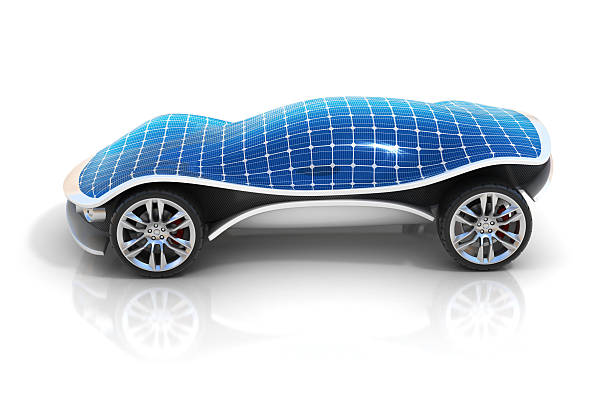
Through an analysis of prototype developments, commercial deployments, and partnerships between automotive and renewable energy sectors, the paper provides a comprehensive overview of the technological attributes and market landscape shaping solar-powered mobility. It also addresses critical barriers such as high manufacturing costs, limited solar conversion efficiency, and regulatory hurdles. Finally, strategic recommendations are outlined to accelerate adoption and integration into broader sustainable transport ecosystems.
1. Introduction
The transportation sector is a major contributor to global carbon emissions, accounting for nearly 24% of direct CO₂ emissions from fuel combustion worldwide. As urbanization intensifies and vehicle ownership rises, there is increasing urgency to develop cleaner, more sustainable mobility solutions. Solar-powered vehicles (SPVs) have emerged as a promising technology, leveraging renewable solar energy to power transportation with minimal environmental impact.
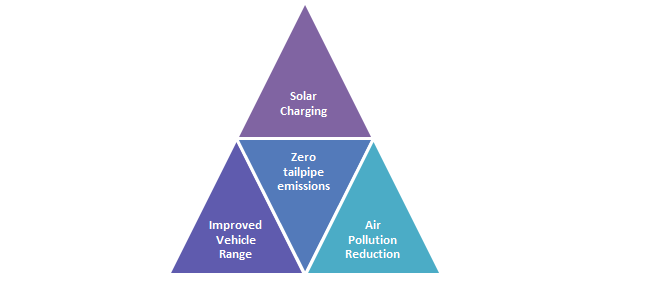
SPVs integrate photovoltaic cells, usually mounted on the vehicle’s roof or body panels, with electric drivetrains and battery storage to harvest and utilize solar energy for propulsion. Unlike conventional internal combustion engine vehicles, SPVs produce zero tailpipe emissions, offering the potential to significantly reduce air pollution and dependence on fossil fuels.
While fully solar-powered vehicles capable of running solely on solar energy remain largely experimental, hybrid designs that supplement battery power with solar charging are gaining traction. Innovations in solar cell efficiency, lightweight materials, and energy management systems continue to improve vehicle range, performance, and affordability.
This paper explores the technology, benefits, and challenges of solar-powered vehicles, providing a comprehensive overview of their development stage, market potential, and future outlook in the global effort toward sustainable transportation.
2. Problem Statement
Despite growing environmental concerns and advances in renewable energy, the transportation sector remains heavily reliant on fossil fuels, contributing significantly to greenhouse gas emissions and urban air pollution. Conventional vehicles powered by internal combustion engines are inefficient, costly to operate, and pose serious sustainability challenges.
Electric vehicles (EVs) have gained popularity as a cleaner alternative, but their dependence on grid electricity—often generated from non-renewable sources—limits their overall environmental benefits. Additionally, EV adoption faces hurdles such as limited driving range, long charging times, and insufficient charging infrastructure.
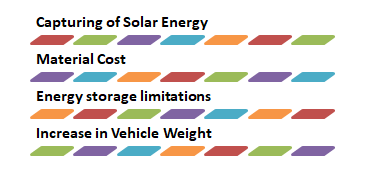
Solar-powered vehicles present a compelling solution by harnessing clean, renewable energy directly from the sun. However, several technical and practical challenges hinder widespread adoption:
- Limited Solar Energy Capture: Current photovoltaic technologies have efficiency constraints, and available surface area on vehicles restricts the amount of solar energy that can be harvested for propulsion and battery charging.
- High Costs:Advanced solar cells, energy storage systems, and lightweight materials necessary for SPVs contribute to elevated production costs compared to conventional and electric vehicles.
- Energy Storage Limitations:Efficiently storing solar energy for consistent vehicle operation, especially in low sunlight or nighttime conditions, remains a significant challenge.
- Performance Trade-offs: Adding solar panels and associated systems can increase vehicle weight and complexity, potentially impacting performance, safety, and design flexibility.
- Infrastructure and market readiness:Lack of widespread industry standards, limited consumer awareness, and underdeveloped supply chains impede commercial scalability.
Addressing these challenges requires continued innovation in solar cell efficiency, battery technology, vehicle design, and supportive policy frameworks. Only then can solar-powered vehicles transition from niche prototypes to mainstream sustainable transportation options.
3. Technology Attributes
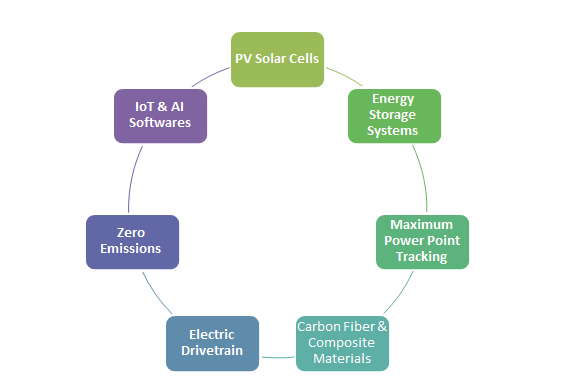
Solar powered vehicles (SPVs) combine multiple advanced technologies to harness solar energy efficiently and convert it into propulsion power. Key technology attributes that define SPVs include:
Photovoltaic (PV) Solar Cells
The primary energy harvesting component, modern SPVs typically use high-efficiency monocrystalline or multi-junction solar cells to maximize sunlight conversion on limited vehicle surface area. Innovations in flexible and lightweight solar panels allow better integration with vehicle design without compromising aerodynamics or weight.
- o Modern SPVs use high-efficiency monocrystalline or multi-junction solar cells, with conversion efficiencies exceeding 22-28%. The global solar panel market was valued at approximately $184 billion in 2023, with ongoing R&D investments pushing cell efficiencies and reducing costs.
Energy Storage Systems
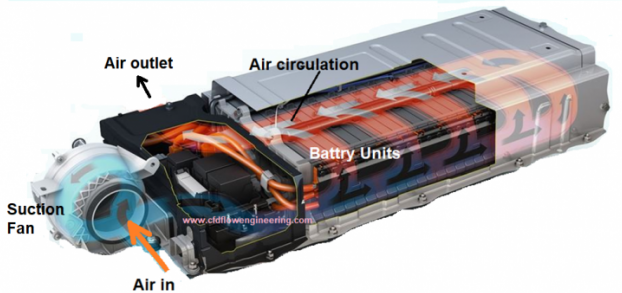
Lithium-ion batteries remain the dominant energy storage solution, balancing energy density, weight, and charge cycles. Advanced battery management systems optimize charging and discharging to prolong battery life and ensure energy availability during low solar input periods.
- o Lithium-ion batteries dominate, offering energy densities between 150-250 Wh/kg. The global battery market for EVs and renewable applications is expected to exceed $200 billion by 2030, driven by demand for higher capacity and longer-lasting batteries for SPVs.
Power Electronics and Control Systems
Efficient inverters and Maximum Power Point Tracking (MPPT) systems ensure optimal energy capture from solar panels under varying sunlight conditions. Intelligent control units manage energy flow between solar cells, battery packs, and electric motors to maximize efficiency.
- o Advanced inverters with MPPT technologies can increase solar energy capture efficiency by up to 30%, with investments in smart power electronics growing at a CAGR of 12%, reaching a market size of $45 billion by 2028.
Lightweight Materials and Aerodynamics
To offset the added weight and surface area of solar arrays, SPVs employ advanced composites, carbon fiber, and aerodynamic designs that reduce drag and improve energy efficiency, enabling longer range and higher performance
- o Using carbon fiber and composites reduces vehicle weight by 20-40%, improving range by up to 25%. The global composites market was valued at $100 billion in 2023, with automotive applications constituting over 30% of demand.
Electric Drivetrains
SPVs use electric motors powered either directly by solar energy or stored battery energy, enabling zero tailpipe emissions and quieter operation compared to internal combustion engines.
- o Electric motors in SPVs can achieve efficiencies of 85-95%, significantly reducing energy loss compared to combustion engines. The electric motor market is projected to reach $140 billion by 2030, propelled by growth in EVs and renewable energy applications.
• Integration with Smart Systems
Modern SPVs incorporate IoT sensors and AI-driven software to monitor vehicle performance, predict maintenance needs, optimize energy consumption, and adapt driving modes based on solar availability and battery status.
- o IoT and AI-enabled vehicle management systems improve energy efficiency by 10-20%, with the automotive IoT market forecast to hit $500 billion by 2030, emphasizing connectivity and intelligent energy use.
These technologies collectively enable SPVs to operate more sustainably and independently from traditional energy grids, pushing forward the vision of clean, renewable transportation.
4. Stage of Development
Solar-powered vehicles (SPVs) are progressing rapidly from research labs and concept stages toward limited commercial viability. While fully solar-reliant vehicles remain rare, hybrid models—combining traditional battery-electric drivetrains with integrated solar charging systems—are gaining momentum. Key developments are occurring in both the passenger vehicle and light utility segments
a. Prototype and Concept Models:
• Over the last decade, several companies and academic institutions have showcased SPV prototypes with varying levels of solar integration:
- Lightyear (Netherlands): Solar-electric vehicle with 5 m² of panels, adding up to 70 km/day of range.
- Aptera Motors (USA): 3-wheeled solar EV with 1,000-mile range, up to 40 miles/day from solar, raised over $100M in crowdfunding.
- Sono Motors (Germany): Sion EV with 112 km/week solar range, now focusing on solar retrofit kits.
- Stella Vie (TU Eindhoven): Family-sized SPV with over 1,000 km range.
- Toyota Prius PHV (Japan): Solar-equipped Prius with 44.5 km/day range.
b. Commercial and Research-Backed Pilots
- Stella Vie (TU Eindhoven): Developed by a Dutch university team, Stella Vie is a family-sized SPV capable of over 1,000 km range, setting benchmarks for efficiency and solar capture in real-world conditions.
- Toyota Prius PHV (Japan): In partnership with Sharp and NEDO, Toyota tested a solar-equipped Prius with up to 44.5 km/day of solar-assisted range. The panels cover the roof, hood, and rear, enhancing grid independence.
c. Government and Institutional Support
- The European Union, U.S. Department of Energy, and Japan’s NEDO are actively funding research and incentives related to solar mobility and vehicle-integrated photovoltaics (VIPV).
- The global VIPV market is projected to grow at a CAGR of 26.5%, reaching $689 million by 2032.
d. Technology Maturity:
- While solar panels and electric drivetrains are mature technologies, their integration into mainstream vehicles still faces key limitations:
- Energy Output Gap: On average, vehicle-mounted solar panels generate 2–6 kWh/day, sufficient for 20–40 km of daily travel, depending on weather and vehicle efficiency.
- Cost per watt:VIPV installations currently cost $1.5–3.0 per watt, higher than rooftop solar (~$1/W) due to custom curvature, robustness, and weight constraints.
- Commercial Readiness Level (CRL): Most SPVs are at CRL 5–7 (validation to demonstration phase), with only a few achieving CRL 8–9 (limited commercial rollout).
4.1 Market Reasearch

5. Market Research
5.1 Key Players
- Aptera Motors: Raised $100M, partnered with LG Energy Solution, CTNS, Inmotive, and Pininfarina. Targets production in 2025–2026.
- Lightyear: Secured 21,000 pre-orders (€840M revenue potential) with Valmet Automotive and Arval partnerships.
- Toyota: Holds 200+ VIPV patents, partnered with Sharp and NEDO for high-efficiency solar cells.
- Hyundai-Kia: 150+ VIPV patents, Sonata Hybrid solar roof adds 1,300 km/year range.
- Sono Motors: Over 20,000 deposits for Sion EV, now licensing solar tech with ElringKlinger.
- Squad Mobility: Affordable urban EV with 21–30 km/day solar range, production starting 2025.
- Hanergy: 500+ VIPV patents, partnered with Audi, Tesla, and others for thin-film solar solutions.
- Tesla: Acquired SolarCity for $2.6B, integrating VIPV into Cybertruck and Solar Roof ecosystems.
6. Benefits of Solar-Powered Vehicles
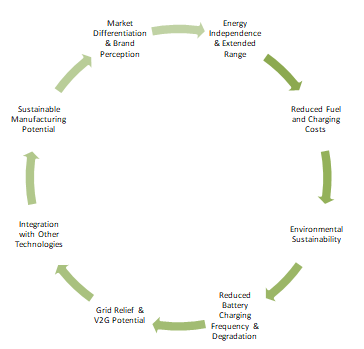
- Energy Independence: Up to 70 km/day of solar range reduces grid reliance.
- Cost Savings: Saves $800–$2,000 annually on fuel/electricity costs.
- Environmental Sustainability: Up to 20% reduction in lifecycle GHG emissions (NREL).
- Reduced Battery Stress: Solar trickle charging extends battery lifespan.
- Grid Relief: V2G/V2H capabilities support grid resilience.
- Smart Integration: IoT and AI improve efficiency by 10-20%.
- Sustainable Manufacturing: 95% recyclable materials (e.g., Aptera).
- Market Differentiation: ESG benefits and regulatory incentives enhance brand value.
7. Challenges
- Limited Energy Generation: Vehicle surface constraints and 15–22% solar efficiency limit power output.
- High Costs: VIPV costs ($1.5–3.0/watt) and long payback periods hinder adoption.
- Weather Dependency: Performance drops in cloudy or short-daylight regions.
- Battery Constraints: Energy storage and management systems add complexity.
- Infrastructure Gaps: Lack of tailored charging and maintenance infrastructure.
- Regulatory Barriers: Misaligned standards and lack of incentives slow progress.
- Consumer Awareness: Low understanding and range anxiety limit market trust.
8. Conclusion
Solar-powered vehicles (SPVs) offer a promising path to sustainable, energy-independent transportation. Innovations from companies like Aptera, Lightyear, and Toyota, alongside growing VIPV markets, signal strong potential. Despite challenges in efficiency, cost, and infrastructure, advancements in solar cells, batteries, and smart systems are driving progress. Collaborative efforts in standardization, R&D, and public education are critical to scaling SPVs from niche to mainstream, aligning transportation with global environmental goals.