Executive Summary
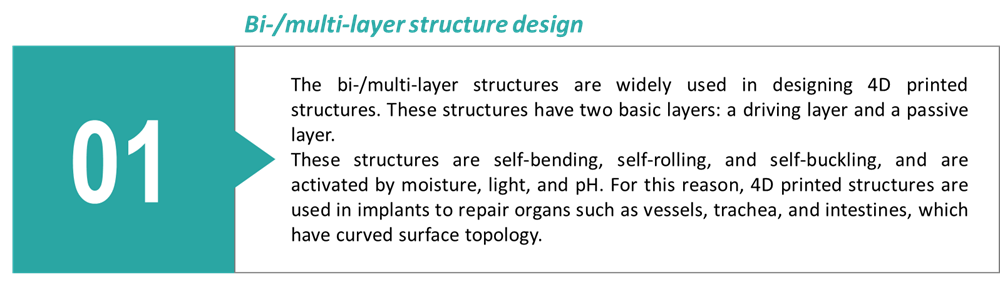
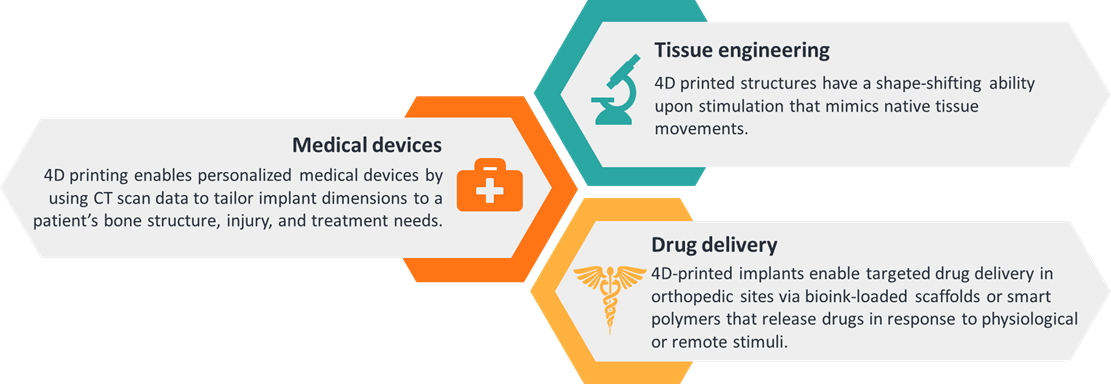
This white paper explores the potential of 4D-printed scaffolds in biomedical applications such as tissue engineering, drug delivery, and personalized medical devices. Unlike traditional 3D printing, 4D printing introduces a fourth dimension i.e., time into 3D printing. These 4D-printed scaffolds can be designed in bi-/multi-layer configurations, gradient material properties, and origami-inspired geometries to achieve self-actuating behavior. These designs allow the created implants and scaffolds to mimic the dynamic nature of human tissues and organs. Despite these promising advancements, several challenges still remain. Material diversity, biocompatibility, printing precision, and cost-effectiveness are some of the critical areas that require further research and development to enable widespread clinical adoption of 4D-printed scaffolds.
1. Introduction
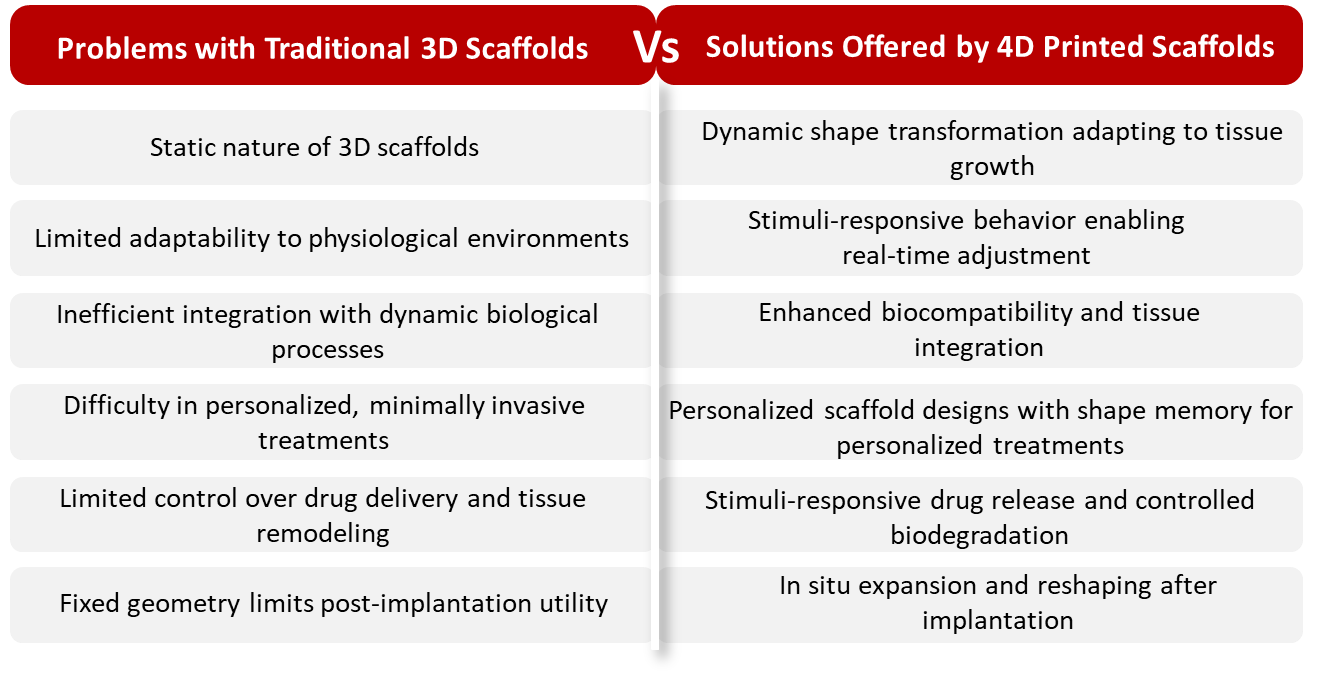
The development of three-dimensional (3D) printing technologies has received considerable attention in biomedical applications. 3D printing has the ability to design patient-specific scaffolds with high spatial precision. However, 3D printing has its own limitation: 3D printed objects are static and unable to dynamically change shape when subjected to external stimuli.
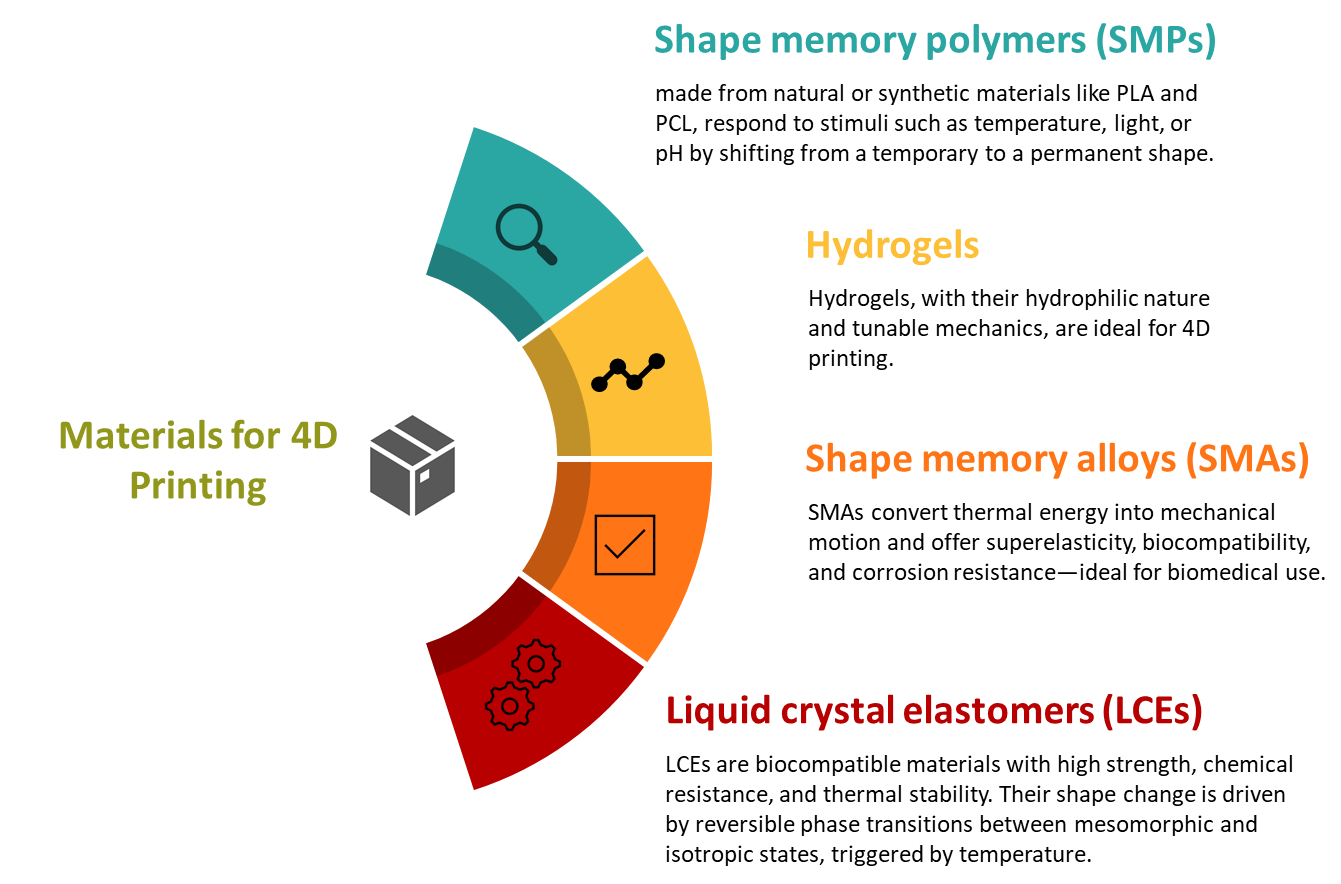
To overcome above limitations, researchers have explored the emerging technology of four-dimensional (4D) printing. 4D printed scaffolds are advanced, smart biomaterial structures created using 4D printing technology, where a fourth dimension, time, is incorporated into 3D printing. 4D scaffolds are designed to mimic the natural extracellular matrix (ECM) and provide an appropriate environment for cell growth, differentiation, and formation of new tissues. 4D printed scaffolds have the ability to change their properties, shape, and even functionality with time in response to specific external stimuli such as temperature, pH, humidity, light, or magnetic fields.
In this white paper, the potential of 4D printed scaffolds in biomedical applications, challenges, and future directions is discussed.
2. The Problem-Solution Matrix in 4D Printing
3. Stimuli-Responsive Materials for 4D Printing
4. Printing Techniques Enabling Time-Responsive Constructs
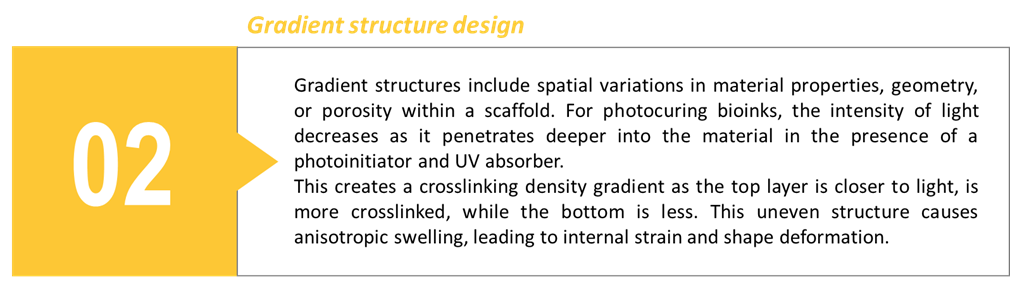
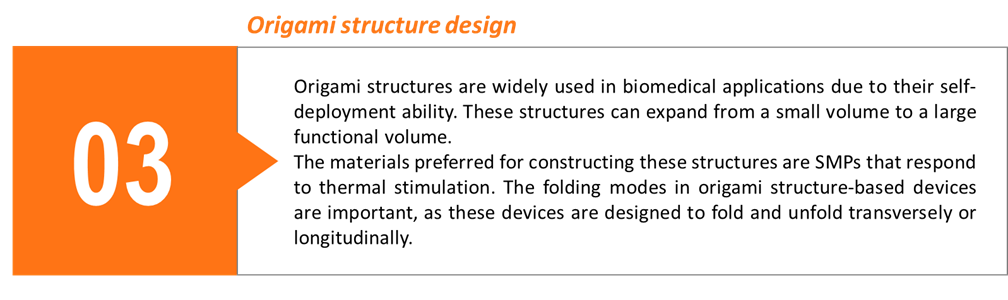
5. From Layers to Origami: Structural Design Modalities in 4D Printing
6. Biomedical Applications of 4D-Printed Structures
7. IP Activity in 4D-Printed Scaffolds
As part of our analysis of patent activity in 4D-Printed Scaffolds, an IP landscape study was conducted to identify patents related to 4D printed material in biomedical applications. A total of 3270 patents application were analyzed and 227 patent applications were selected for final analysis.
7.1 Relevant keywords, synonyms and classes used for search
- 4D Printing, 4 Dimensional Printing, 4D Bioprinting, Four Dimensional Printing
- Scaffolds, Implants, Structures, Constructs, Materials
- Biomedical Implants, Surgical Implants, Medical Implants, Bone Implants, Tissue Implants, Stents
- Relevant patent classification includes B33Y10/00, B33Y80/00, A61L2430/02, B29C64/379, A61L2400/16, A61L27/50, C08L2201/12
7.2 Graphical Analysis from the identified patents (227 patent applications)
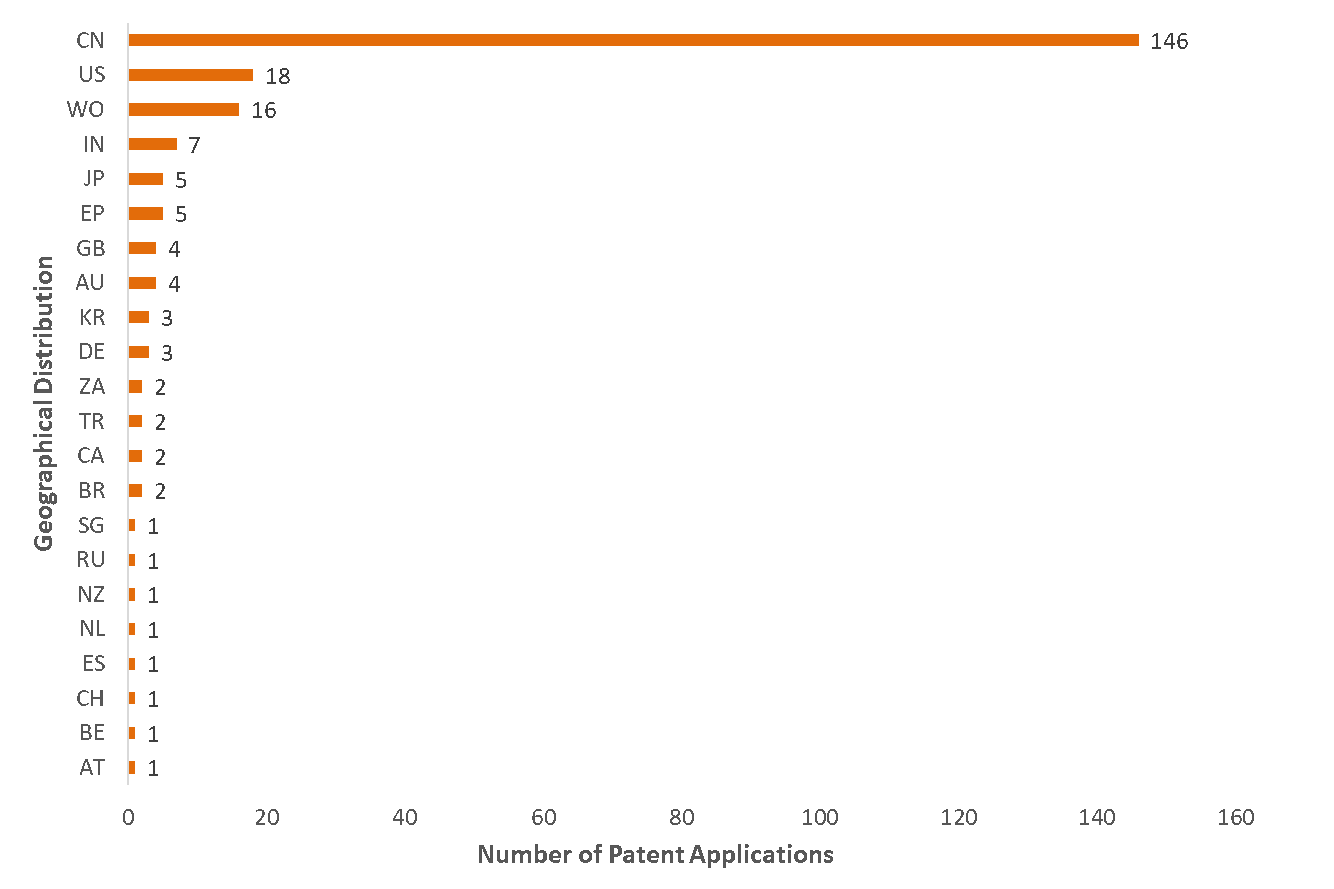
Figure 5 shows the distribution of patents across publication countries, China has most patents i.e., 146, followed by US with 18 patent applications.
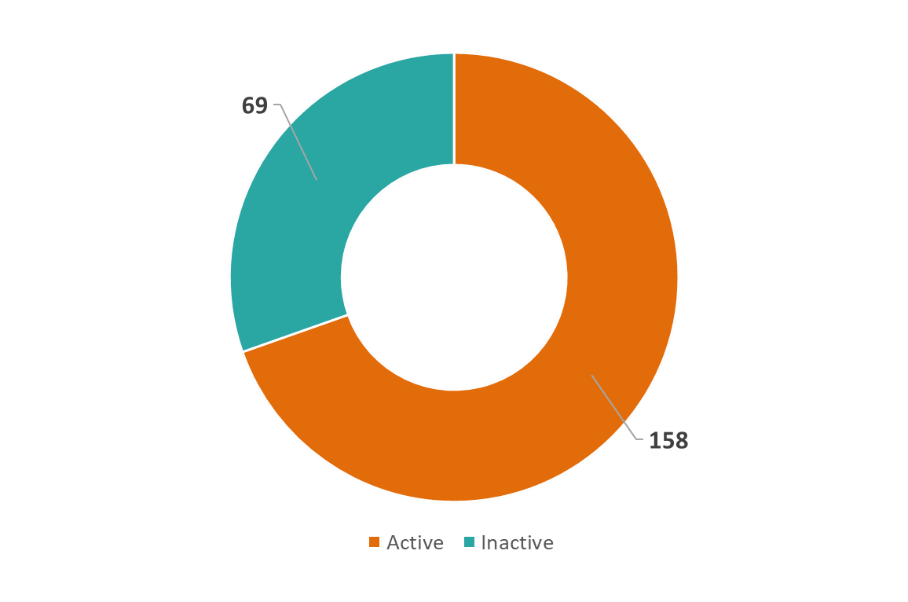
Figure 6 shows a pie chart demonstrating the total number of active and inactive patent applications, with 158 patents categorized as "Active" and 69 as "Inactive".
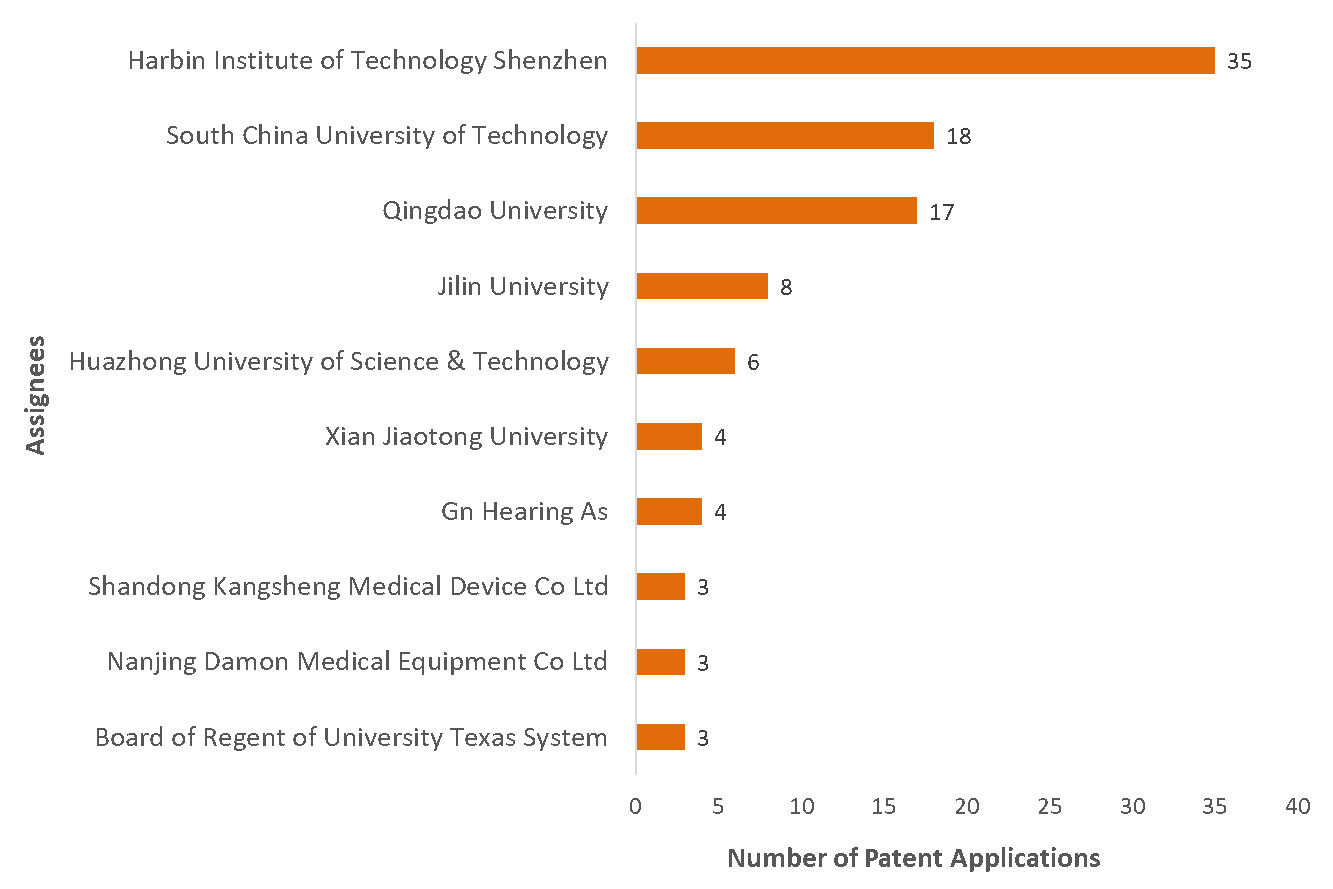
Figure 7 shows the top patent assignees, with Harbin Institute of Technology Shenzhen leading with 35 patent applications, focusing on advanced biomedical devices and materials, primarily stents for different body parts and bone implants. South China University of Technology is second with 18 patent applications, with main focus on shape memory alloy materials for medical applications.
8. Market Outlook
8.1 Regional Analysis of the 4D Printing in Healthcare Market
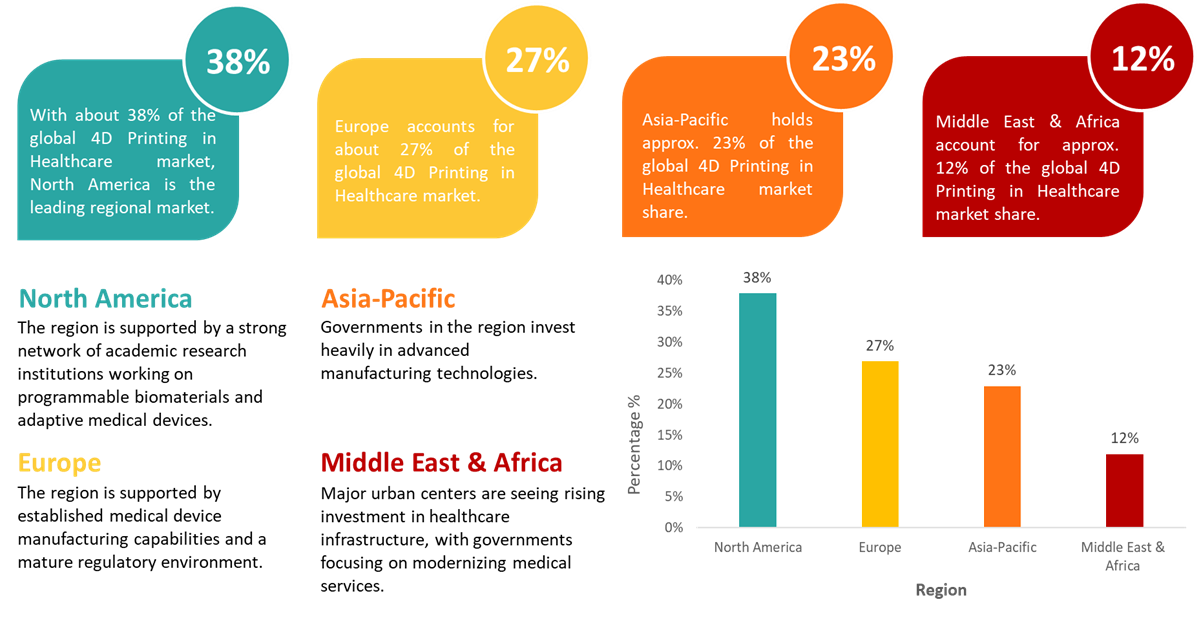
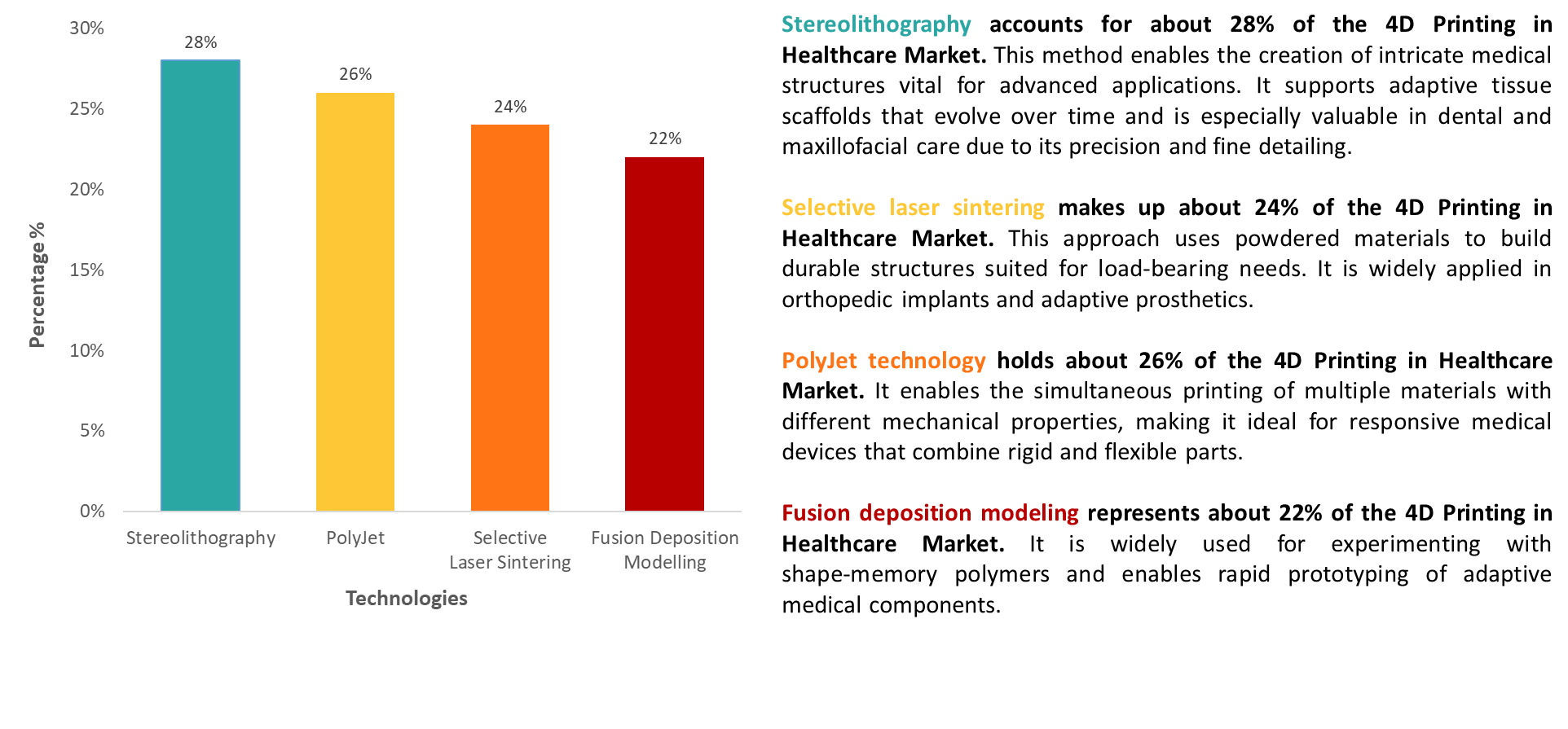
9. Future Outlook
Although there are several challenges, the field of scientific research and engineering innovation is constantly exploring and innovating around these issues. 4D printing technology will continue to grow and evolve in the biomedical field and will bring better treatment experiences and results to patients. Despite being new, 4D printing has already shown its impact in the biomedical sector. Given the rapid progress in 4D printing, it's likely to reach its full potential in the near future, especially with advancements in affordable, high-resolution printers and, most crucially, the discovery of new biocompatible smart materials.
10. Conclusion
4D-printed scaffolds represent a significant leap forward in biomedical engineering, offering dynamic, responsive solutions tailored to individual patient needs. Their ability to mimic natural tissue behavior, deliver drugs to targets precisely, and adapt to physiological conditions makes them a powerful and useful tool in modern medicine. However, efforts must be made to address current limitations in material science, biocompatibility, and manufacturing scalability to fully realize their potential. By overcoming these limitations, 4D printing can revolutionize orthopedic treatments and broader healthcare applications, thereby paving their way to smarter, more effective, and personalized medical solutions.
How Pitch Scientific Supports Innovation in 4D-Printed Scaffolds
Pitch Scientific brings deep domain expertise in 4D-Printed Scaffolds, grounded in a strong understanding of printing techniques, materials, structural designs and biomedical applications in 4D printing. Our expertise includes:
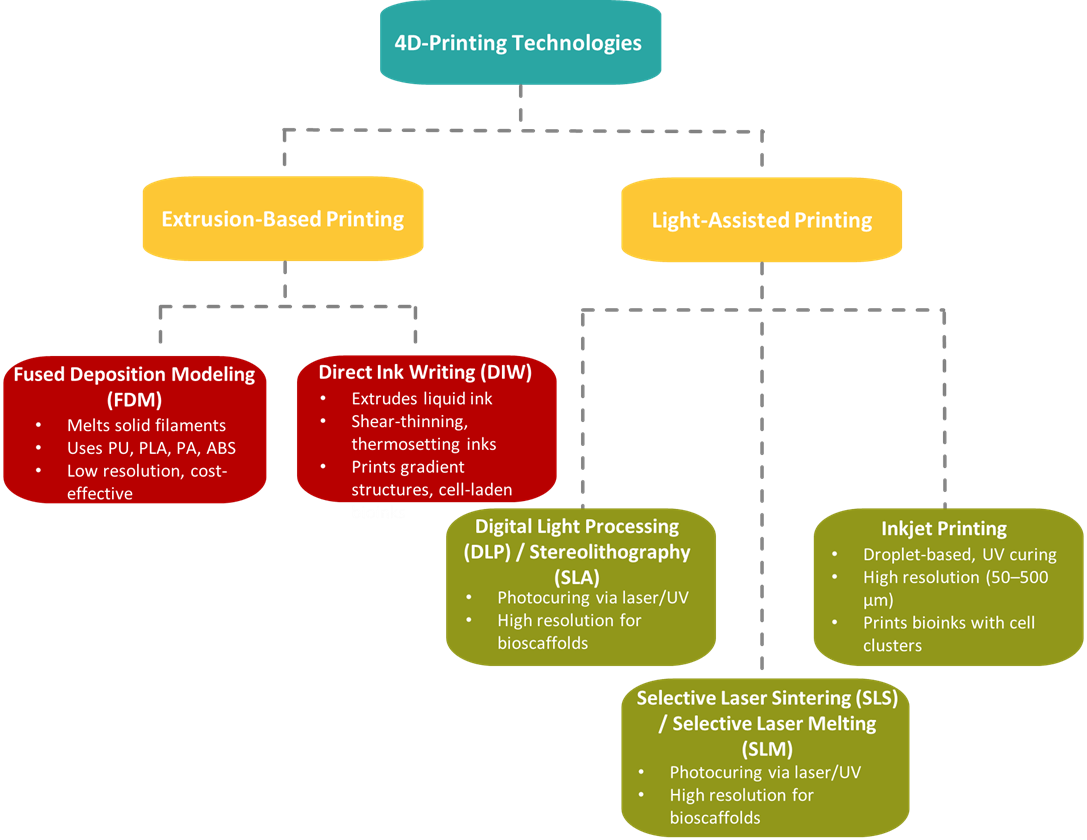
Printing Techniques:Understanding different 4D printing techniques for the manufacturing of biomedical and medical devices or implants.
Materials for 4D Printing:Expertise in different types of materials used in 4D printing for different applications.
Structural Design Modalities in 4D Printing:Understanding different designs used in 4D printed structures including layers, gradient and origami.
Biomedical Applications:Familiarity with different applications, not just biomedical but other applications as well.
With this focused scientific expertise, Pitch Scientific supports informed decision-making around 4D printed structures and their translation into practical biomedical applications.
References
- https://pmc.ncbi.nlm.nih.gov/articles/PMC10339452/
- https://advanced.onlinelibrary.wiley.com/doi/full/10.1002%2Fadma.202402301
- https://pubs.rsc.org/en/content/articlelanding/2021/tb/d1tb01335a/unauth
- https://www.sciencedirect.com/science/article/pii/S2405844023065714
- https://www.mdpi.com/2073-4360/13/4/563
- https://biomedical-engineering-online.biomedcentral.com/articles/10.1186/s12938-025-01334-3
- https://link.springer.com/article/10.1007/s43452-025-01303-6
- https://iopscience.iop.org/article/10.1088/1758-5090/aa8114/meta
- https://onlinelibrary.wiley.com/doi/abs/10.1002/smll.202106824
- https://www.nature.com/articles/s41467-024-45938-0
- https://pubmed.ncbi.nlm.nih.gov/39504649/
- https://advanced.onlinelibrary.wiley.com/doi/10.1002/adfm.202407592
- https://pmc.ncbi.nlm.nih.gov/articles/PMC10227133/
- https://pmc.ncbi.nlm.nih.gov/articles/PMC8257657/
- https://www.fortunebusinessinsights.com/4d-printing-in-healthcare-market-105356
- https://www.databridgemarketresearch.com/reports/global-4d-printing-in-healthcare-market
About Pitch Scientific
Pitch Scientific is a patent research and analytics firm that supports innovation across science, technology and intellectual property. We work closely with research teams, IP professionals and decision-makers to help them navigate complex technical and patent landscapes with clarity and confidence.
With strong experience in patent analytics, prior art research and technology intelligence, Pitch Scientific works with start-ups, research-driven organizations, corporations and law firms across a wide range of technology areas. Our team brings together scientific understanding and practical IP knowledge to deliver insights that are clear, reliable and directly relevant to client needs.
We place emphasis on sound methodologies, flexibility and consistent quality in our work. By focusing on accuracy, transparency and continuous learning, Pitch Scientific strives to create lasting value for clients and the innovations they develop.
Our Capabilities
- Knock Out Search
- Patentability Search
- Freedom to Operate Search
- Invalidation Search
- Patent Infringement Search
- Evidence of Use/Claim Charts
- Evidence of Use/Claim Charts
- Patent Portfolio Analysis
- Literature Watch
- Patent & Technology Landscape
- Technology Scouting
- Technology Scouting
- Market Research