INDUSTRY 5.0: REDEFINING THE FUTURE OF HUMAN MACHINE COLLABORATION
Author: Anuj kumar, Shivom
Executive Summary
Industry 5.0, also called the Fifth Industrial Revolution, reflects a shift in focus from an economic approach to a focus on social value and well-being. It is a new phase of industrialization in which humans work together with advanced technology and AI-driven robots to improve processes at work. It encompasses many processes, not just manufacturing, and is enabled by developments in IT, including artificial intelligence, automation, data, IoT, Machine Learning, and virtualization.
The most important difference with Industry 4.0 is that it puts worker well-being at the heart of the production process, bringing prosperity beyond jobs
Contents
ABSTRACT
1. INTRODUCTION
2. PROBLEMS
2.1 Transforming Manufacturing across Centuries
2.2 Drawback in previous Industry Revolutions
3. PROPOSED SOLUTION
3.1 Key principles for Industry 5.0
3.2 Technologies Contribution
4. RESULT AND BENEFITS
5. APPLICATION AREA: IMPLEMENTATION OF INDUSTRY 5.0
1) Smart hospital
2) Manufacturing industry
3) Supply Chain Management
6. COMPETITIVE ANALYSIS
6.1 Regional Market Trends:
6.2 Patent Analysis (Industry 5.0)
6.3 Patent Analysis (Industry 5.0 within Human-centric)
7. Challenges and Future Directions
7.1 Skills Gap and Workforce Training
7.2 High Upfront Investment Costs
7.3 Cyber Attack Vulnerability
7.4 Future
8. Conclusion
9. References
1. INTRODUCTION
Industrial 5.0 is the next phase of the industrial revolution where humans work closely with advanced technologies like AI, robotics, and IOT. Unlike Industry 4.0, which focused mainly on automation and efficiency, Industry 5.0 puts people at the centre, combining human creativity with smart machines to create more personalized, sustainable, and worker-friendly manufacturing. It aims to empower workers, deliver customized products, and promote environmentally responsible production for a balanced and resilient industrial future.
2. PROBLEMS
2.1 Transforming Manufacturing across Centuries
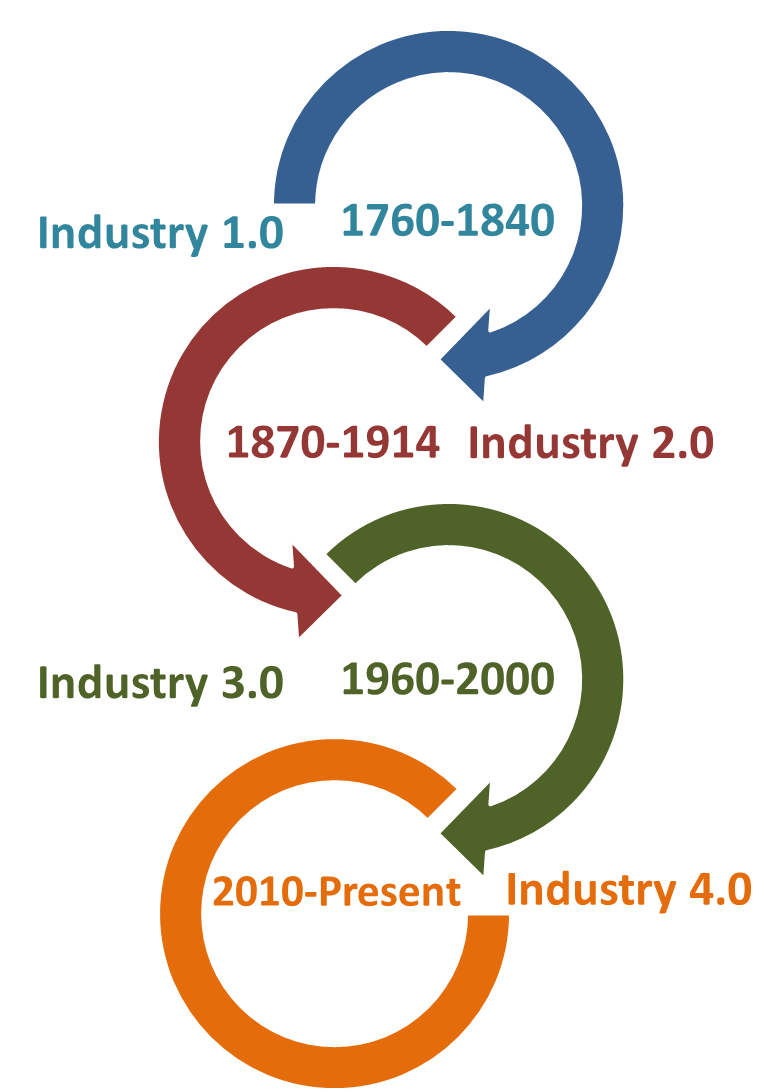
First Industrial Revolution (1760 –1840): At the time, people witnessed massive extraction of coal along with the significant invention of the steam engine that created a new type of energy that later on helped speed up the manufacturing of railroads, thus accelerating the economy.
Second Industrial Revolution (1870 –1914): It started at the end of the 19th century, with massive technological advancements in industries that helped the emergence of a new source of energy—electricity, gas, and oil.
Third Industrial Revolution (1960–2000): The third revolution brought forth the rise of electronics, telecommunications and, of course, computers. The third industrial revolution opened the doors to space expeditions, research, and biotechnology through the new technologies.
Fourth Industrial Revolution (2010– Present): The fourth industrial era. It is the time of intelligent systems. In 2016, Klaus Schwab of the World Economic Forum called it the Fourth Industrial Revolution.
Artificial intelligence, big data, cloud computing and automation are transforming how factories think. They can predict maintenance, optimize production and adapt in real time.
2.2 Drawback in previous Industry Revolutions
Industry 1.0: Long hours, low pay, child labour, poor working conditions, and pollution in cities from manufacturing and coal use.
Industry 2.0: Environmental pollution increased, labour unrest, unsafe factories, social inequality, urban overcrowding.
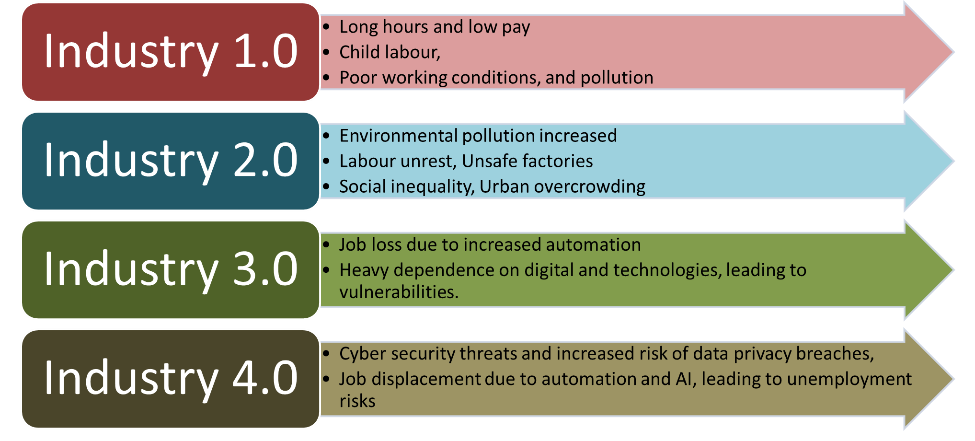
Industry 3.0: Job loss due to increased automation and need for new skills. Heavy dependence on digital and electronic technologies, leading to vulnerabilities.
Industry 4.0: Cyber security threats and increased risk of data privacy breaches, Job displacement due to automation and AI, leading to unemployment risks.
3. PROPOSED SOLUTION
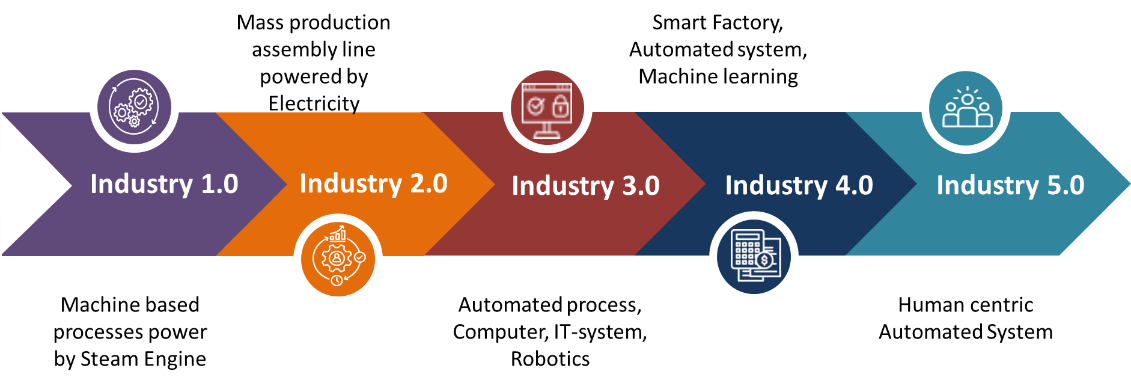
After experiencing the various problems and challenges across the previous industrial revolution such as labour exploitation and pollution in Industry 1.0, In 2.0 Pollution and lack of knowledge, In 3.0, automation-related job losses in Industry and In 4.0 issues like cyber security, privacy, ethical AI, and workforce displacement in Industry. There emerged a need for a more balanced and human-centric approach.
This led to the emergence of Industry 5.0, which highlights collaboration between humans and machines, empowers workers, and promotes personalized manufacturing, sustainability, and resilience. Unlike previous industrial revolutions that mainly focused on efficiency and automation, Industry 5.0 seeks to align technological progress with social well-being and environmental stewardship, shaping a future where industry serves both people and the planet.
3.1 Key principles for Industry 5.0
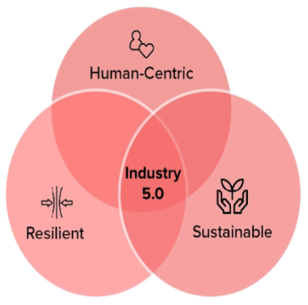
Human-centric focus: Placing human needs at the forefront of the production process. Industry 5.0 shifts from asking what workers can do with new technology to exploring what technology can do for workers. Recognizing that robots excel in precision but lack the critical and creative thinking of humans.
Sustainability: Aiming for a sustainable industry by businesses adopting circular economy processes to minimize environmental impact. This includes initiatives to decrease energy consumption, greenhouse emissions, waste generation, and the preservation of natural resources.
Resilience: In a resilient industry, production processes exhibit high robustness, safeguarding against disruptions and supporting critical infrastructure during crises. The vulnerabilities exposed by the pandemic underscore the need for increased agility and resilience in supply chains and manufacturing components.
3.2 Technologies Contribution
Some specific technologies that contribute to this synergy:
4. RESULT AND BENEFITS
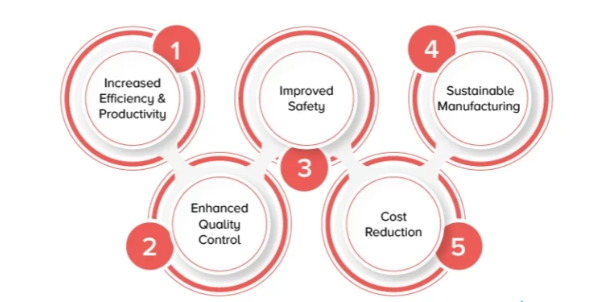
Industry 5.0 brings a host of benefits to manufacturing processes, workers, and society as a whole. Let's delve into the advantages of Industry 5.0 for manufacturing Industry growth in detail.
1) Increased Efficiency and Productivity:
By utilizing cutting-edge technologies like AI, IOT, and robotics, businesses can streamline production processes, minimize downtime, and boost overall efficiency. This optimization enables human workers to focus on more complex, value-driven tasks, ultimately driving higher productivity.
2) Enhanced Quality Control:
AI-powered quality control systems can rapidly process large volumes of data in real-time, making it easier to identify defects and deviations from specifications. Additionally, IOT sensors offer continuous monitoring of production parameters, allowing for early detection of potential quality issues and minimizing the chances of defective products reaching consumers.
3) Improved Safety:
Industry 5.0 is crucial in enhancing safety within the manufacturing sector. Collaborative robots and AI-driven predictive maintenance systems help identify and address safety risks on the shop floor. Additionally, AR and VR technologies create immersive training experiences and virtual simulations, allowing workers to safely practice high-risk tasks in a controlled environment.
4) Cost Reduction:
Industry 5.0 helps lower costs through AI-powered optimization and predictive maintenance, which reduce downtime, extend equipment life, and cut maintenance expenses. Additionally, additive manufacturing allows for on-demand production of spare parts and customized components, decreasing inventory costs and eliminating the need for large storage facilities.
5) Sustainable Manufacturing:
Industry 5.0 promotes eco-friendly practices and resource-efficient processes that support environmental sustainability goals. AI-driven algorithms and IOT-enabled monitoring systems optimize resource use and energy efficiency, minimizing environmental impact. Additionally, additive manufacturing produces less waste compared to traditional methods, fostering a more sustainable approach to production.
5. APPLICATION AREA: IMPLEMENTATION OF INDUSTRY 5.0
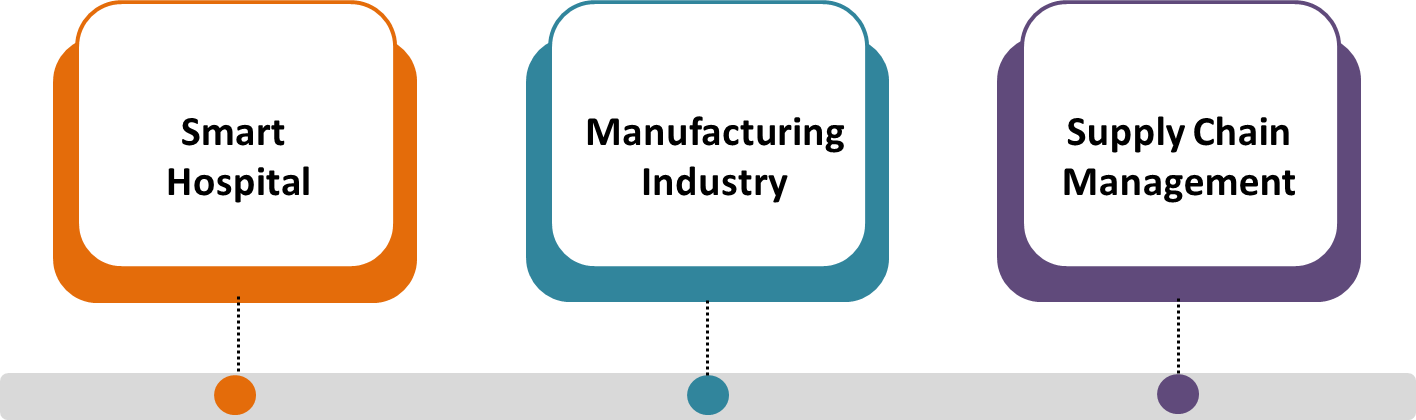
Listed are the area where the industry 5.0 may implemented and play a vital role under human control:
1) Smart hospital
Industry 5.0 in healthcare combines human expertise with advanced technologies like AI, robotics, and IOT to create smart hospitals that enable real-time patient monitoring and personalized care. It supports doctors in managing infections efficiently, enhances medical training, and uses machine learning for disease diagnosis and prediction. Personalized implants and precise robotic surgeries improve patient outcomes and reduce waste. Overall, Industry 5.0 fosters a more effective, patient-centered healthcare system.
2) Manufacturing industry
Industry 5.0 in manufacturing focuses on close collaboration between humans and advanced machines to create more sustainable and personalized production. It emphasizes repurposing and recycling resources to reduce environmental impact. Intelligent robots and Cloud manufacturing enable flexible, secure, and efficient operations, allowing production closer to raw materials and reducing costs. This new model replaces repetitive tasks with automation while enhancing worker creativity and innovation, leading to smarter, eco-friendly, and customer-focused manufacturing systems.
3) Supply Chain Management
Industry 5.0 transforms supply chain management by integrating human creativity with advanced machines like cobots to meet the rising demand for personalized products. It enables smarter, more agile, and sustainable supply chains through technologies like AI, machine learning, and cloud-based systems. This collaboration improves efficiency, reduces waste, and enhances transparency across the entire supply chain—from raw materials to end-user delivery—while also minimizing risks and boosting customer satisfaction.
6. COMPETITIVE ANALYSIS
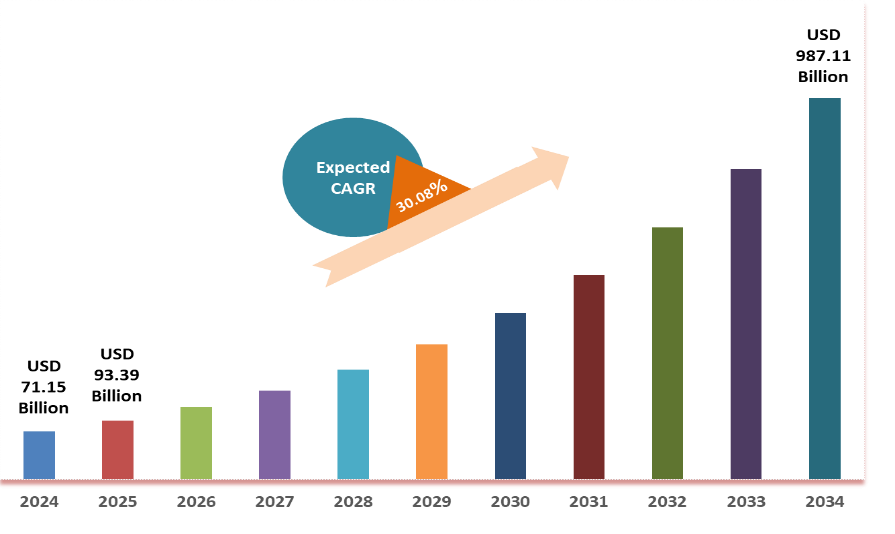
The global industry 5.0 market size accounted at USD 71.15 billion in 2024 and is predicted to increase from USD 93.39 billion in 2025 to approximately USD 987.11 billion by 2034, expanding at a CAGR of 30.08% from 2025 to 2034. The industry 5.0 market is driven by the growing need for large-scale customization. Growth is driven by the increasing adoption of advanced technologies like AI, IOT, robotics, block chain, and additive manufacturing that enable human-machine synergies, personalization, and sustainability.
6.1 Regional Market Trends:
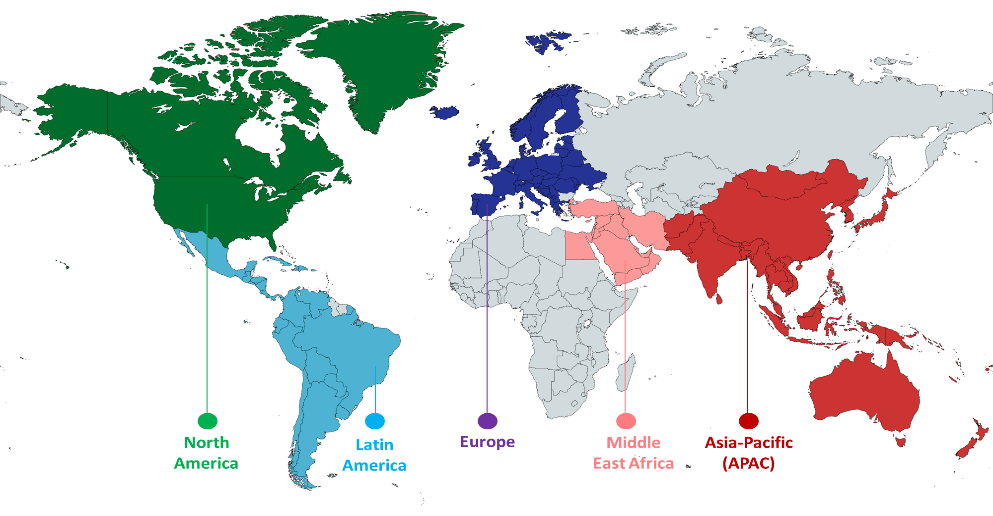
a) Asia- Pacific (APAC) is projected to dominate the Industry 5.0 market by 2035 with an estimated 48% market share, fuelled by initiatives like "Made in India" and "Made in China" aiming to cement the region as a global manufacturing hub.
b) North America market is estimated to be the second largest, led by the growing adoption of advanced technologies like AI, cloud computing, and industrial automation.
c) The Europe Industry 5.0 Market would witness market growth of 28.6% CAGR during the forecast period.
d) Other regions like Latin America and Middle East & Africa are emerging markets with growing adoption rates.
6.2 Patent Analysis (Industry 5.0)
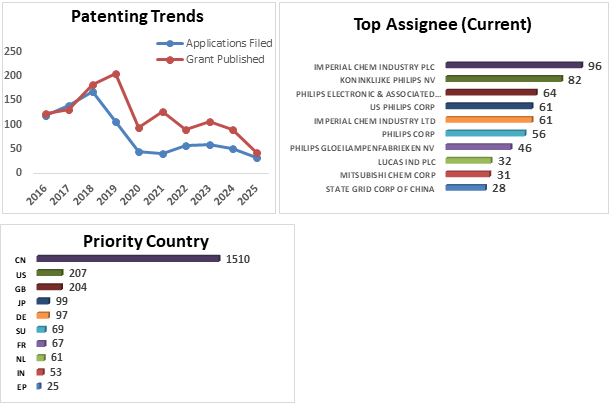
Projected rate of patent filings, publications, or grants over a specific period for a particular technology, company, or geographical region are shown through patent trending.
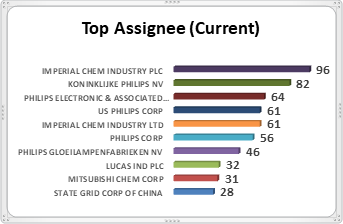
Graph are based of Approx. 2572 patent family under technology industry 5.0. Here, the graph (last 10 years) shows the decline of filling process under this technology so there may some scope under this technology. During this tenure leading Assignee list, Priority country and their legal status are shown through the graph.
6.3 Patent Analysis (Industry 5.0 within Human-centric)
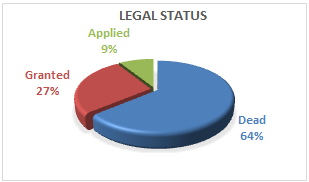
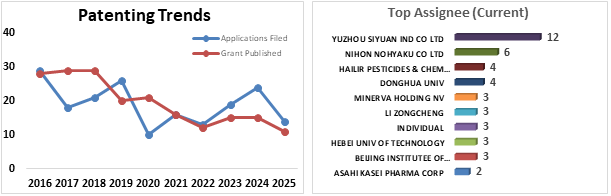
Graph are based of Approx. 300 patent family under technology "industry 5.0 within Human-Centric".
Here the graph shows the up down trends (within last 2-3 years) in technology based on low no of patent filling. However, the China remains in the top amongst the country.
7. Challenges and Future Directions
7.1 Skills Gap and Workforce Training
Industry 5.0 requires workers to develop new skills to collaborate effectively with smart machines and robots. There is a shortage of skilled personnel capable of managing advanced AI, IOT, and robotics, necessitating extensive retraining and education.
7.2 High Upfront Investment Costs
The adoption of advanced Industry 5.0 technologies, such as collaborative robots (cobots), AI systems, and digital twins, involves significant capital expenditure. Small and medium enterprises (SMEs) may find it particularly challenging to afford these technologies.
7.3 Cyber Attack Vulnerability
Industry 5.0 brings higher cyber security risks as interconnected devices, robots, and sensors expand potential entry points for attacks. Cybercriminals are using more advanced methods to exploit new technologies and vulnerabilities. Massive amounts of sensitive data exchanged between humans and machines also demand stronger protection. Alongside technology, employee training and awareness remain vital to reducing human errors that could expose systems.
7.4 Future
The future for Industry 5.0 includes the manufacture of robots, including industrial robots, with improved artificial intelligence and cognitive computing technologies to improve efficiencies and speed of delivery, while at the same time allowing people to focus on other areas.
8. Conclusion
Industry 5.0 is a human-focused shift in manufacturing. It combines new technologies with human creativity, sustainability, and resilience. This approach empowers workers, allows for personalized production, and encourages eco-friendly processes. While it has many benefits, Industry 5.0 also encounters challenges like workforce retraining, high investment costs, and cyber security risks. Tackling these issues through innovation, teamwork, and on-going learning will be essential for creating a strong, sustainable, and competitive industrial future.
9. References
1. Amr Adel, Yoobee College of Creative Technologies, School of Technology, Auckland, New Zealand National Library of Medicine, "Future of industry 5.0 in society: human-centric solutions, challenges and prospective research areas".
2. MDPV we create smart factory, "Industry 5.0 Start Date and Key Insights on 5.0 – Smart Factory Glossary".
3. Adrian Dima, K.Factory, "The Four Industrial Revolutions: Transforming Manufacturing across Centuries".
4. IED Team, "A Brief History of the 4 Industrial Revolutions that Shaped the World".
5. Wondershare, "The Complete Industrial Revolution Timeline".
6. HGS, "What is Industry 5.0? Explore the Key Benefits & Future Potential".
7. Sudeep Srivastava, Appinventiv, "Industry 5.0 – Revolutionizing the Factory Floor with Human-Centric Manufacturing
8. Researchnester, "Industry 5.0 Market Size and Forecast 2026-2035".
9. Ovidiu Cojocariu, Digitalya, "Industry 5.0 opportunities and challenges: bring your factory into the future".
10. Sgbox, "The importance of Cyber Security for Industry 5.0".
11. Patseer: A product and custom software solution for patent research, data analysis, and project management.
----------End----------


-Sensors-Next-Generation-Flexible-Devices/Wrinkled-Silver-Nanowire-AgNW-Sensors-Next-Generation-Flexible-Devices.png)


-Innovative-Applications-and-Insights.jpeg)
