Phase change materials (PCMs) provide a novel approach to battery cooling by storing and releasing heat at critical moments. This whitepaper outlines their evolution, current applications, IP Protection, and future role in safer, more efficient energy storage.
Phase Change Materials for Battery Thermal Management
Focused on electric-vehicle (EV) battery packs and batteries in general
Navneet Singh
Gurseerat Singh
Table of Contents
1. Introduction and Scope
2. What are Phase Change Materials? (Fundamentals)
2.1 Mechanism of Operation
2.2 Categories of PCMs / Classifications of PCMs
1. Organic PCMs
2. Inorganic PCMs (Salt Hydrates)
3. Eutectic PCMs
4. Composite and Encapsulated PCMs
5. Nano-Enhanced PCMs (NePCMs)
2.3 Key Properties for Battery Applications
3. Origin & Development (Concise Timeline)
a. 1950s–1970s: Early Foundations
b. 1980s–1990s: Expansion into Electronics & Aerospace
c. 2000s: Broadening Applications
d. 2010s: The EV Era Begins
e. 2020s–Present: Advanced Integration & Commercialization
4. How PCMs Work in BTMS — Mechanisms & Architectures
5. Current Methods for Battery Thermal Management (Comparison)
5.1 Air Cooling
5.2 Liquid Cooling
5.3 Heat Pipes & Refrigerant-Based Cooling
5.4 Hybrid PCM-Based Systems
6. Shortcomings of Existing Methods & the Problems PCMs Target
6.1 Air cooling — why "simple" fails for high power
6.2 Liquid cooling — effective but heavy, complex, and risky
6.3 Heat pipes & refrigerant loops — powerful but niche/complex
6.4 Other shared problems across active systems
6.5 Limitations of traditional PCMs (what they must overcome)
6.6 What specific problems do PCMs target? (Mapping gaps → PCM capabilities)
7. Advanced PCM Technologies — How They Overcome Existing Problems
7.1 Thermal-conductivity networks (metal foams, fins, graphite matrices)
7.2 Nano-enhanced PCMs (NePCMs): graphene, CNTs, metal nanoparticles
7.3 Encapsulation & form-stabilized PCMs (micro/macro encapsulation, composite impregnation)
7.4 Salt-hydrate stabilization: curing phase-separation & supercooling
7.5 Hybrid architectures (PCM + active cooling, PCM + heat pipes, PCM + microchannels)
8. Innovation pacing up across the Patent Segment
8.1 Patent Trends
8.2 Preferred Region for IP Protection
8.3 Key players leading the Patent Race
9. Roadmap & Recommendations for Future Development
9.1 Technical priorities & recommended R&D portfolio
9.2 Risks & mitigation
9.3 Suggested phased investment & milestones (example)
10. Conclusions
Phase Change Materials (PCMs) for Battery Thermal Management
Executive Summary
Phase change materials (PCMs) store/release thermal energy through latent heat and are emerging as a promising passive or hybrid solution for battery thermal management systems (BTMS). When properly selected and engineered (encapsulation, thermal-conductivity enhancement, structural supports like metal foams), PCMs can reduce peak cell temperatures, slow propagation of thermal runaway, and reduce energy used for active cooling. Recent research has focused on nano-enhanced PCMs, salt-hydrate systems, composite/encapsulated PCMs, and PCM + active-cooling hybrids to improve conductivity, cycling stability, and safety.
1. Introduction and Scope
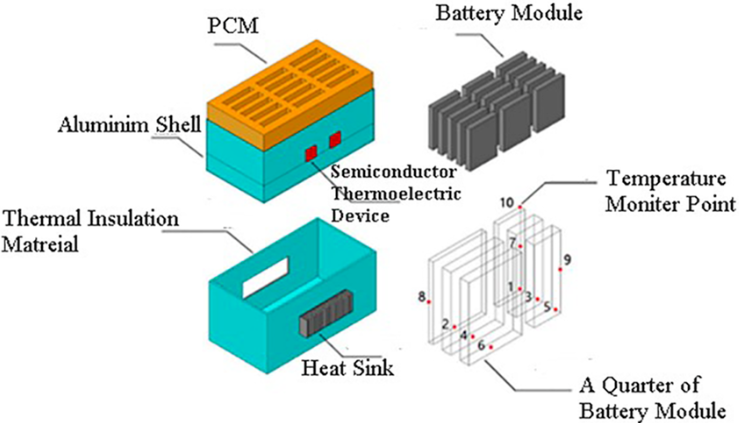
The rapid electrification of transportation and the rise of large-scale energy storage systems have intensified the need for high-performance thermal management solutions. Lithium-ion cells generate heat due to electrochemical reactions, internal resistance, and environmental factors. If unmanaged, high temperatures degrade capacity, accelerate aging, reduce cycle life, and increase the likelihood of thermal runaway.
Conventional methods such as air and liquid cooling have matured but struggle with increasingly aggressive duty cycles — including ultra-fast charging, high-power acceleration, and high-energy-density pack architectures. These duty cycles produce both steady-state heat loads and sharp thermal spikes, and no single active method addresses both efficiently.
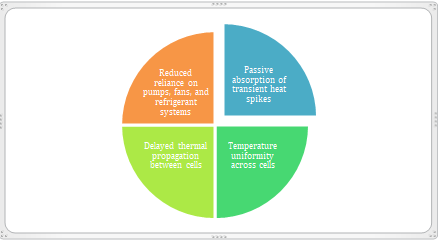
PCMs offer an alternate route:
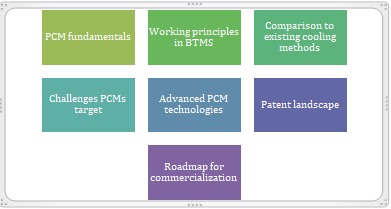
The focus of this whitepaper is to evaluate PCMs in the context of EV battery packs and stationary storage, covering:
This document is intended for battery engineers, system architects, R&D managers, IP strategists, and academic researchers evaluating next-generation thermal solutions.
2. What are Phase Change Materials? (Fundamentals)
PCMs are substances that store and release thermal energy during phase transitions — typically solid ↔ liquid. Unlike materials that heat up gradually, PCMs absorb large amounts of latent heat at an almost constant temperature, making them ideal for stabilizing the thermal environment around battery cells.
2.1 Mechanism of Operation
- Melting (heat absorption): As cells heat up, PCM melts and absorbs energy without significant temperature rise.
- Solidification (heat release): As temperature falls, PCM re-solidifies, releasing stored energy to the surroundings or an active system.
2.2 Categories of PCMs / Classifications of PCMs
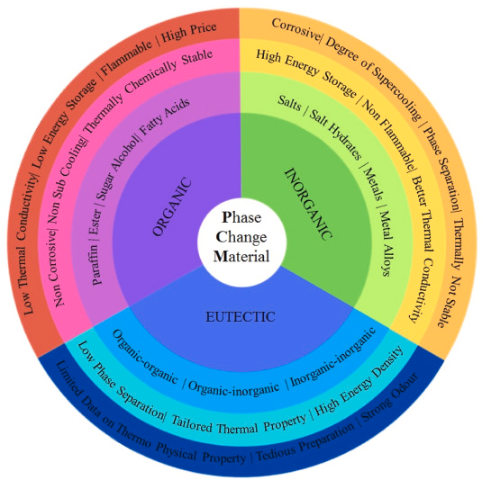
Organic PCMs
- Examples: paraffins, fatty acids.
- Pros: chemically stable, non-corrosive, predictable melting.
- Cons: low thermal conductivity, flammability.
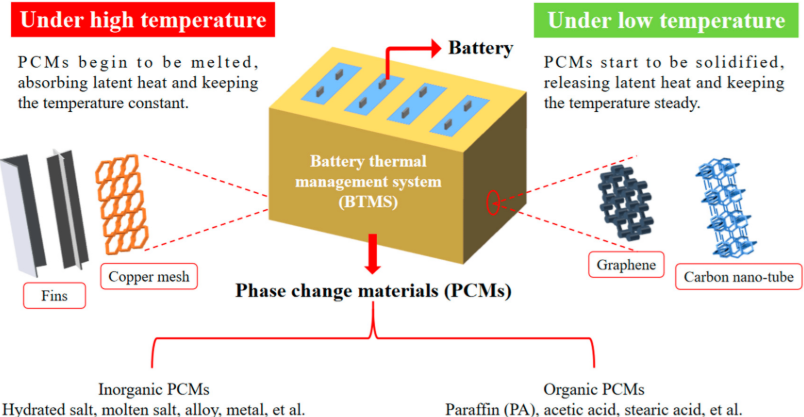
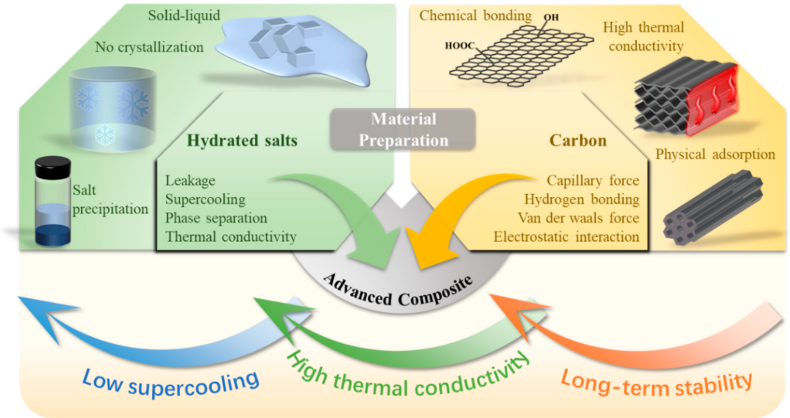
Inorganic PCMs (Salt Hydrates)
- Examples: calcium chloride hexahydrate, sodium sulfate decahydrate.
- Pros: high volumetric heat capacity, non-flammable.
- Cons: phase separation, supercooling, corrosion.
Eutectic PCMs
- Definition: mixtures of two or more components that melt/solidify at a single, sharp temperature.
- Pros: sharp melting points, tunable compositions.
- Cons: formulation complexity, stability challenges.
Composite and Encapsulated PCMs
- Approach: PCMs combined with structural supports (e.g., porous graphite, metal foam) or encapsulated at micro/nano scale to enhance stability and prevent leakage.
- Pros: improved mechanical stability, reduced leakage.
- Applications: increasingly used in EV modules.
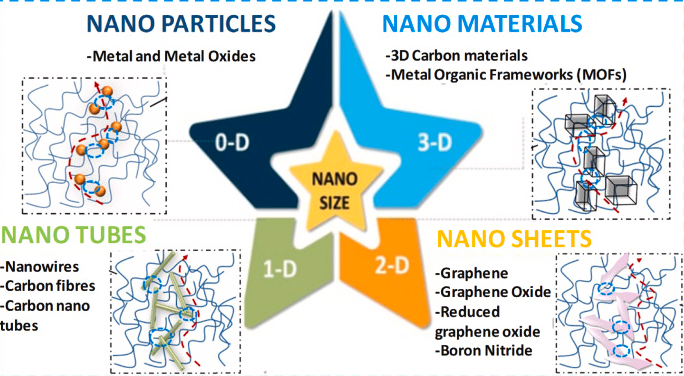
Nano-Enhanced PCMs (NePCMs)
- Approach: PCMs doped with high-conductivity nanoparticles such as carbon nanotubes, graphene, or metallic particles.
- Pros: significantly higher conductivity via graphene/CNTs/metal nanoparticles.
- Cons: cost, dispersion stability issues.
2.3 Key Properties for Battery Applications
For PCMs to be effective in EV battery thermal management systems (BTMS), several properties must be carefully considered:
- Melting point: ~25–45 °C
- Latent heat capacity
- Thermal conductivity (enhanced as needed)
- Cycling stability
- Non-flammability and chemical compatibility
- Form stability and vibration tolerance
3. Origin & Development (Concise Timeline)
The concept of storing and releasing latent heat through phase transitions has been recognized for centuries, but the systematic study and engineering of phase change materials (PCMs) for thermal management applications began only in the mid-20t century. Their development can be traced through several distinct eras:
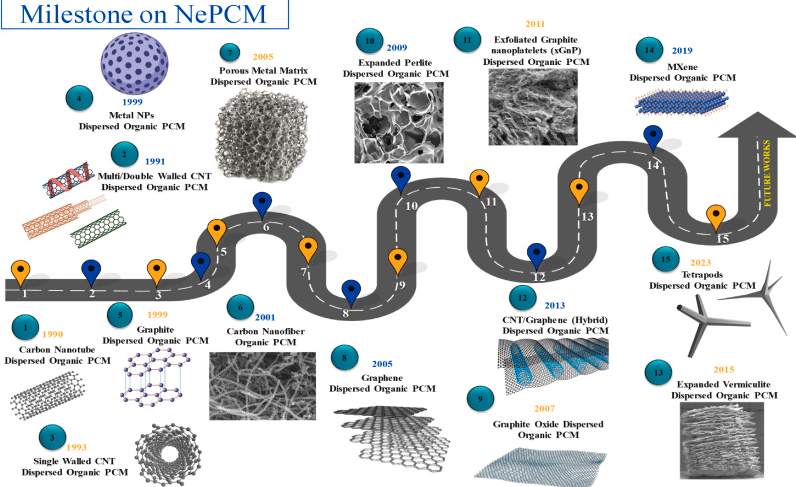
a. 1950s–1970s: Early Foundations
- Initial work focused on paraffins/salt hydrates for buildings and energy storage. Early challenges included leakage and low conductivity.
b. 1980s–1990s: Expansion into Electronics & Aerospace
- PCMs adopted in satellites and high-power electronics. Development of encapsulation technologies began.
c. 2000s: Broadening Applications
- Graphite matrices and metal foams were introduced to improve conductivity. PCMs expanded into solar systems and HVAC.
d. 2010s: The EV Era Begins
- EV growth created demand for passive buffering layers. Studies explored PCM composites, hybrid cooling, and nano-enhanced formulations.
e. 2020s–Present: Advanced Integration & Commercialization
- OEMs and battery suppliers are testing PCM-infused modules. Research focuses on manufacturability, long-term stability, and safety.
4. How PCMs Work in BTMS — Mechanisms & Architectures
This section explains the physical principles by which phase-change materials (PCMs) control battery temperatures, how those mechanisms play out in real components, the ways PCM can be packaged into battery packs, and practical system-level strategies that make PCM effective (or not).
-
Core Principles
- PCMs absorb large amounts of heat during melting, limiting peak cell temperatures.
- Solid–liquid transitions occur near the desired operating range, stabilizing temperature deviations.
- During cooling, PCMs re-solidify and release absorbed heat to ambient or an active coolant.
-
Integration Architectures
- Direct cell encasement: PCM fills inter-cell gaps.
- PCM plates/trays: placed between modules.
- Encapsulated PCM modules: macro or microcapsules.
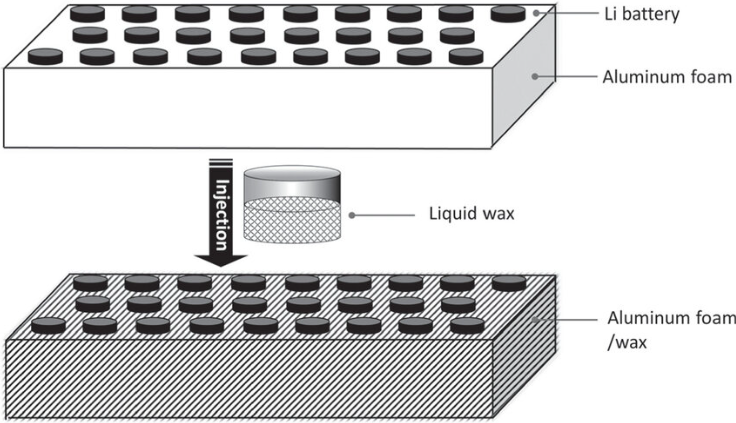
- Form-stable composites: PCM impregnated into graphite or metal foam.
- Hybrid PCM + active cooling: PCM handles spikes; active systems remove steady loads.
- Safety Role: PCMs slow thermal runaway propagation by increasing thermal inertia and absorbing initial heat surges. They cannot prevent cell failure but delay propagation — offering critical safety windows.
5. Current Methods for Battery Thermal Management (Comparison)
Battery Thermal Management Systems (BTMS) are vital for preserving battery performance, safety, and longevity. Below are the prevalent BTMS strategies, each evaluated on cost, weight, complexity, and safety, along with related insights from recent studies.
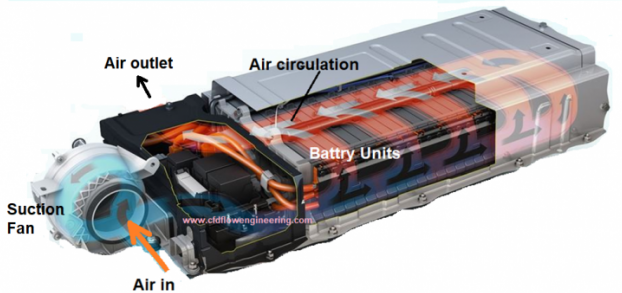
5.1 Air Cooling
- Pros: low cost, simple.
- Cons: poor thermal performance, large temperature gradients.
- Suitable for low-power applications only.
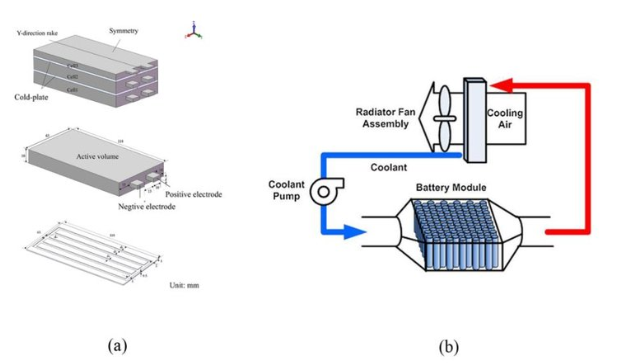
5.2 Liquid Cooling
- Pros: high heat-transfer efficiency, industry standard.
- Cons: added weight, pump power, leak risks.
- Used widely in modern EVs.
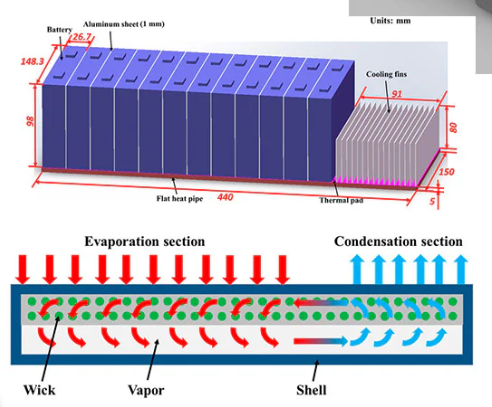
5.3 Heat Pipes & Refrigerant-Based Cooling
- Pros: high-performance spot cooling; refrigerant loops support extreme fast charging.
- Cons: complexity, cost, integration challenges.
5.4 Hybrid PCM-Based Systems
- PCMs buffer transient spikes; active cooling recharges PCM.
- Offers best safety + performance combination; still emerging.
6. Shortcomings of Existing Methods & the Problems PCMs Target
Modern battery systems must manage both steady-state heat generated during normal operation and transient heat spikes produced during fast charging or high-power discharge. Traditional cooling systems address steady-state heat well but often struggle with rapid temperature rises and hot-spot formation.
6.1 Air cooling — why "simple" fails for high power
-
Air has low thermal conductivity and heat capacity,
making it a poor heat transfer medium. Even forced-air
systems struggle to maintain uniform temperatures in
high-energy EV packs. Key drawbacks include:
- Large temperature gradients between cells
- Inefficient cooling under high ambient temperatures
- Risk of localized heating and accelerated aging
- Air cooling is thus insufficient for modern power-dense applications.
6.2 Liquid cooling — effective but heavy, complex, and risky
-
Liquid cooling provides excellent heat transfer but
brings challenges:
- Added mass and packaging complexity (pumps, hoses, plates)
- Risk of coolant leaks in high-vibration environments
- Additional parasitic power consumption
- Limited ability to mitigate rapid thermal spikes
6.3 Heat pipes & refrigerant loops — powerful but niche/complex
- Heat pipes offer passive, high-conductivity heat transfer but are orientation-dependent and hard to scale in large modules. Refrigerant-based cooling provides powerful heat removal but significantly increases system complexity and cost.
6.4 Other shared problems across active systems
- Transient vs steady-state mismatch: Active systems remove continuous heat well but cannot instantly dissipate sharp spikes.
- Packaging penalties: Added mass and volume reduce pack energy density.
- System reliability: Pumps, seals, and valves introduce failure points.
- Safety limitations: Active systems cannot inherently slow thermal runaway propagation.
6.5 Limitations of traditional PCMs (what they must overcome)
-
Traditional organics and salt hydrates also encounter
issues:
- Low intrinsic thermal conductivity
- Leakage or volume expansion during melting
- Phase separation (salt hydrates)
- Slow re-solidification
- Flammability concerns for some organics
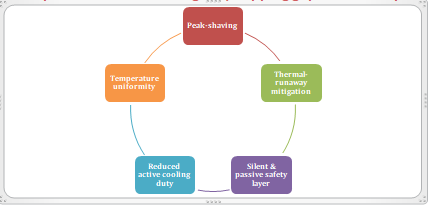
6.6 What specific problems do PCMs target? (Mapping gaps → PCM capabilities)
7. Advanced PCM Technologies — How They Overcome Existing Problems
Advances in materials engineering have significantly improved PCM performance, addressing historical issues such as low thermal conductivity, leakage, and cycling instability. Modern solutions combine structural supports, nano-additives, stabilization chemistry, and hybrid system integration.
7.1 Thermal-conductivity networks (metal foams, fins, graphite matrices)
Embedding PCM in high-conductivity frameworks (expanded graphite, metal foams, or fins) accelerates heat spreading and improves melt uniformity.
-
Benefits
- 5–20× higher effective thermal conductivity
- Faster PCM response during high-power events
- Reduced local hot-spots
-
Trade-offs
- Some loss of latent heat due to matrix volume
- Slight increase in material cost
7.2 Nano-enhanced PCMs (NePCMs): graphene, CNTs, metal nanoparticles
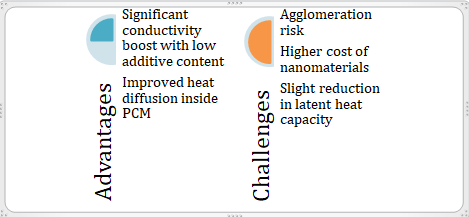
Graphene, CNTs, and metal nanoparticles improve PCM thermal conductivity and reduce response time.
7.3 Encapsulation & form-stabilized PCMs (micro/macro encapsulation, composite impregnation)
Encapsulation surrounds PCM in protective shells; form-stable PCMs embed PCM in rigid porous hosts.
-
Why It Matters
- Eliminates leakage during melting
- Improves mechanical robustness
- Enables modular shapes (plates, sheets, pellets)
Encapsulation (micro/macro) is increasingly preferred for EV battery integration.
7.4 Salt-hydrate stabilization: curing phase-separation & supercooling
Salt hydrates offer high volumetric capacity but need stabilization against supercooling and phase separation.
-
Stabilization Approaches
- Nucleating agents
- Thickening/gelling polymers
- Carbon or silica matrices
- Microencapsulation
These techniques substantially improve cycle life and reliability.
7.5 Hybrid architectures (PCM + active cooling, PCM + heat pipes, PCM + microchannels)
Hybrid systems combine PCM's transient heat absorption with liquid or air cooling for long-term heat rejection.
- Key Advantage: PCM handles thermal spikes → active cooling removes accumulated heat → PCM re-solidifies.
-
Applications
- Fast-charging EVs
- High-C cycling modules
- Safety-focused pack designs
8. Innovation pacing up across the Patent Segment
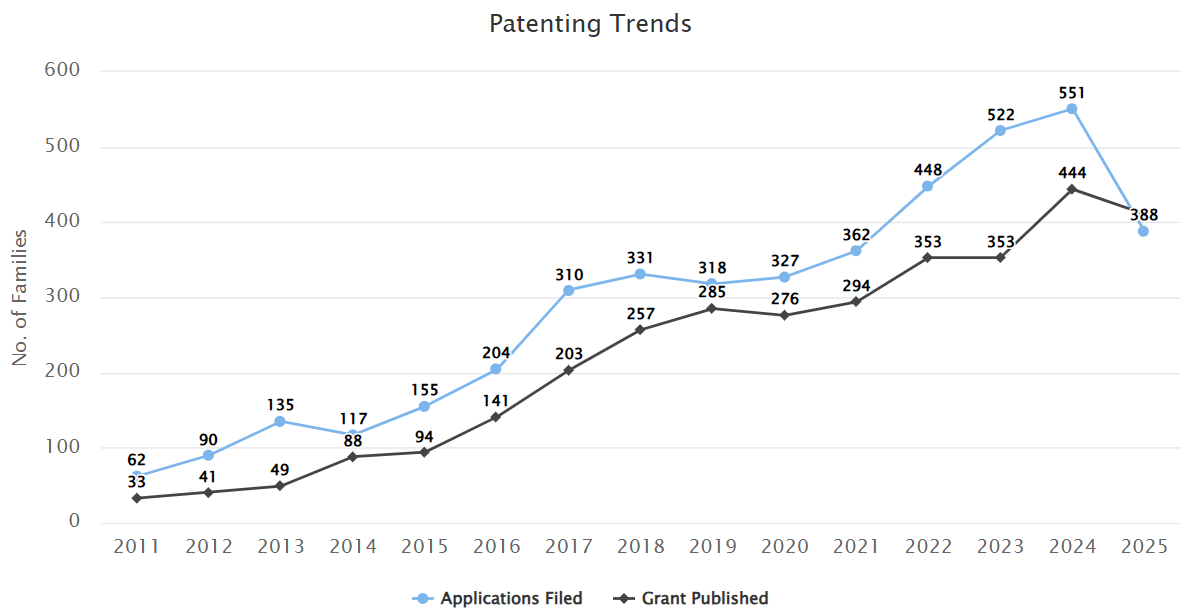
8.1 Patent Trends
As we can see the patent filling has been consistent and steady in past 15 years; it reflects sustained interest and growing technology development in the battery cooling using PCM domain.
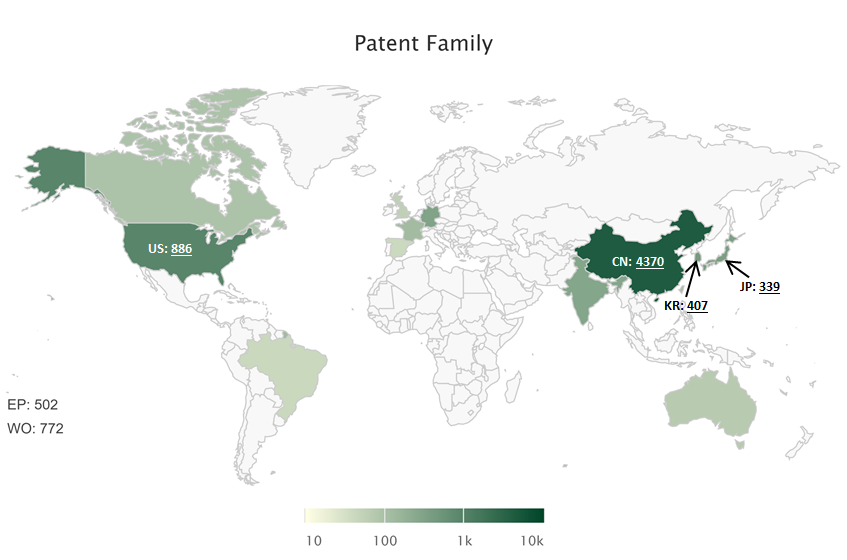
8.2 Preferred Region for IP Protection
China being the electronic hub of the world holds majority of patent families, followed by US, KR and JP
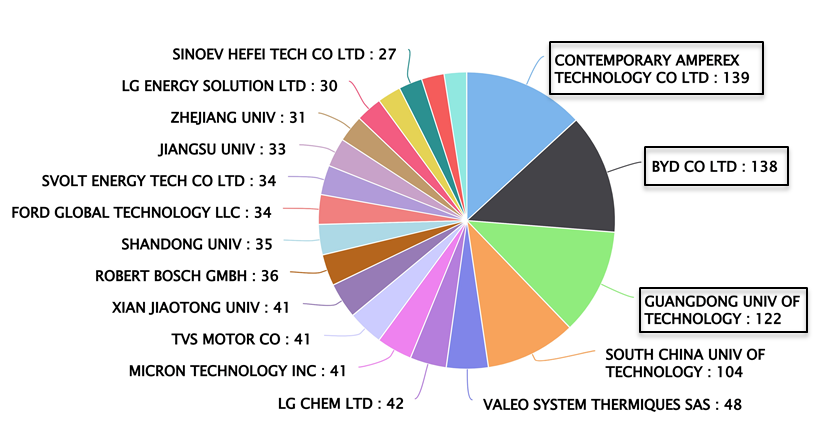
8.3 Key players leading the Patent Race
Top players in this domain are from China, Contemporary Amperex Technology Co. Ltd holding first place, followed by BYD Co. Ltd. and Guangdong university of Technology.
Roadmap & Recommendations for Future Development
Overview — mission & success criteria
The path to mainstream PCM integration in EV battery systems requires coordinated development in materials science, packaging engineering, safety validation, and system integration. While the technology is promising, commercial adoption depends on standardization, cost reduction, and demonstrable reliability.
9.1 Technical priorities & recommended R&D portfolio
- Robust, low-cost conductivity enhancement — focus on expanded graphite and low-loading, manufacturable nano-additives; demonstrate dispersion stability over 10+ years.
- Salt-hydrate stabilization — Develop nucleating agents, gelling/thickeners, and carbon impregnation approaches to maintain volumetric capacity and eliminate phase separation. Recent carbon-enhanced salt-hydrate work shows promise.
- Encapsulation & form-stable composites — optimize shell chemistry for durability, thermal resistance, and recyclability.
- Control & diagnostics — reduced-order PCM state models for BMS integration and predictive preconditioning.
- Module-level abuse & life testing — standardized TRP tests and 1,000+ thermal cycles under automotive environmental profiles.
9.2 Risks & mitigation
- Risk: Nano-additive cost/performance trade-offs limit adoption. → Mitigate: prioritize expanded graphite and low-cost carbon routes; pursue industrial partnerships to scale materials.
- Risk: PCM fails to re-solidify between events (duty-cycle mismatch). → Mitigate: pair PCM with modest active cooling and BMS preconditioning strategies.
- Risk: Regulatory/EoL constraints on encapsulants and nanomaterials. → Mitigate: early lifecycle studies and selection of recyclable shell materials.
9.3 Suggested phased investment & milestones (example)
- Phase A (0–18 mo.): $0.5–1M — module test rigs, material screening, validated models, 2 demo modules.
- Phase B (18–36 mo.): $2–5M — pilot manufacturing line, consortium standard draft, OEM demonstrator integration.
- Phase C (36–84 mo.): Strategic OEM program budgets (>$10M) for fleet pilots, certification, and scale manufacture.
(Estimate ranges depend heavily on geography, partner contributions, and reuse of existing assembly lines — do a tailored CAPEX study before committing.)
10. Conclusions
Phase Change Materials have transitioned from a niche thermal technology to a promising component of next-generation Battery Thermal Management Systems (BTMS). Their ability to passively absorb heat spikes, improve thermal uniformity, reduce active-cooling demand, and delay thermal runaway propagation makes them increasingly relevant in high-energy-density EV applications.
However, PCMs alone are not a universal solution. Their adoption depends on overcoming historical limitations related to conductivity, leakage, cycling reliability, and manufacturability. Modern advances — including conductive matrices, nano-additives, encapsulation, salt-hydrate stabilization, and hybrid PCM–active architectures — demonstrate that these challenges can be solved with focused engineering.
The broader industry now requires:
Standardization of testing
Cost-effective manufacturing routes
Pack-level validation under real EV duty cycles
Integration of PCM modeling into BMS algorithms
If these advancements continue, PCMs will likely become an integral part of future EV battery designs, improving safety, enabling faster charging, and enhancing system reliability.


-Sensors-Next-Generation-Flexible-Devices/Wrinkled-Silver-Nanowire-AgNW-Sensors-Next-Generation-Flexible-Devices.png)


-Innovative-Applications-and-Insights.jpeg)

