1. INTRODUCTION
Mechanical engineering has long been driven by international standards that ensure safety, efficiency, and interoperability. From the ISO 9000 quality management series to ASME boiler and pressure vessel codes, standards underpin industrial design and global trade. Traditionally, these standards were more safety- and performance-oriented than technology-essential, meaning few patents were directly tied to them.

But with Industry 4.0, mechanical systems are becoming increasingly data-driven, networked, and software-embedded. For example:
- Additive Manufacturing (AM): Interoperability between printers, file formats, and material standards is essential for supply chain integration.
- Automotive Engineering: Electrification and autonomous vehicles require integration between mechanical subsystems and ICT standards.
- Robotics: Standardized motion control and kinematic frameworks require compliance with patented technologies.
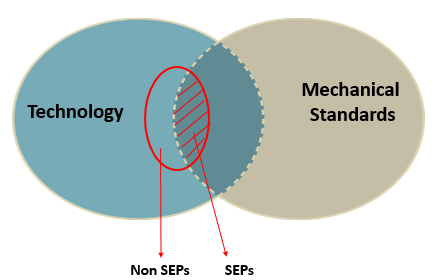
In this context, Standard Essential Patents (SEPs)—patents that must be used to comply with a technical standard—are gaining importance in mechanical engineering.
2. SEPs V/S MECHANICAL ENGINEERING
2.1 What is a Standard Essential Patent?
A Standard Essential Patent is a patent that protects a technology which is unavoidable for implementing a standard. If a standard-setting organization (SSO) adopts a specification that requires the use of a patented technology, that patent becomes "essential." Almost all standards bodies require companies to license these patents using Fair, Reasonable, And Non-Discriminatory (FRAND) terms.
2.2 Mechanical Engineering-Specific Examples
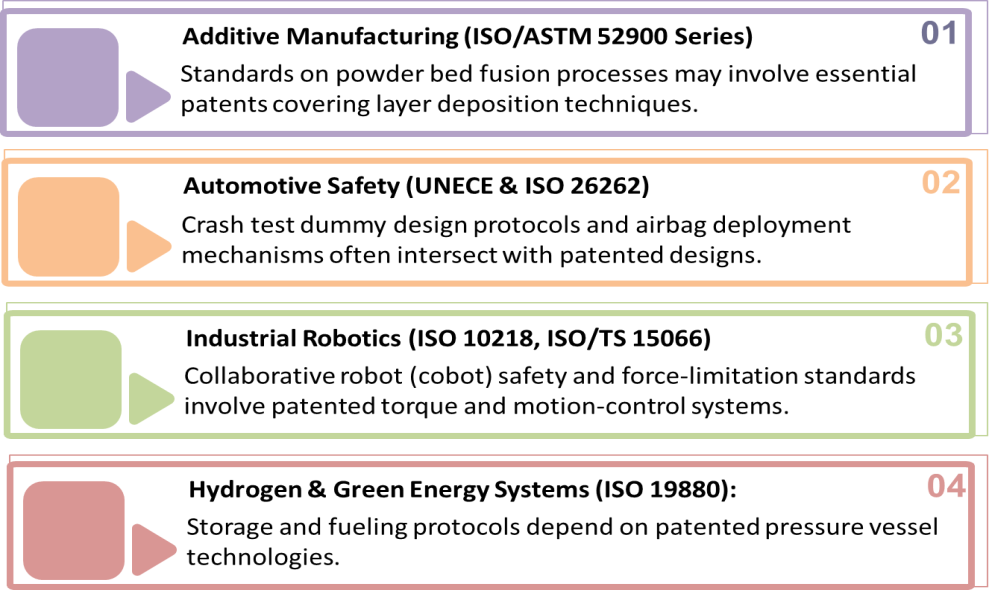
Unlike ICT sectors (where SEPs are mostly software or communication protocols), mechanical SEPs often combine:
- Hardware design innovations (e.g., material structures)
- Mechatronic systems (blending electrical and mechanical domains)
- Cyber-physical controls (where software interacts with hardware performance)
3. LEGAL AND POLICY FRAMEWORK
3.1 Standards-Setting Organizations (SSOs)
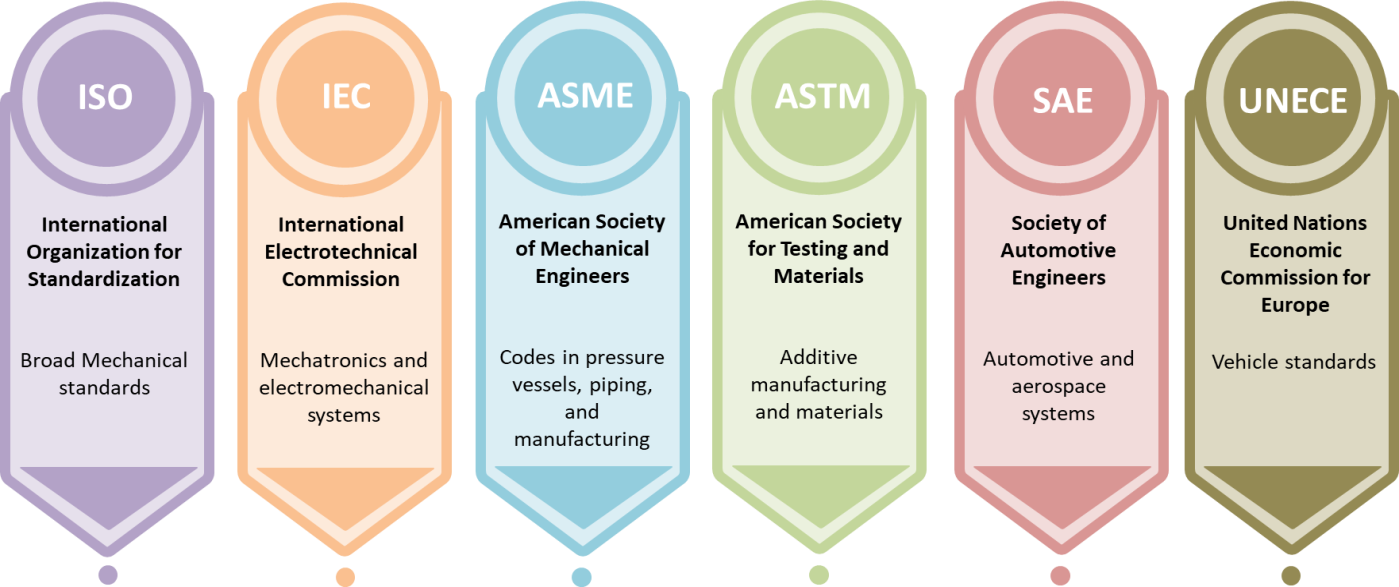
- ISO (International Organization for Standardization): Broad mechanical standards
- IEC (International Electrotechnical Commission): Mechatronics and electromechanical systems
- ASME (American Society of Mechanical Engineers): Codes in pressure vessels, piping, and manufacturing
- ASTM International: Additive manufacturing and materials
- SAE International: Automotive and aerospace systems
- UNECE (United Nations Economic Commission for Europe): Vehicle standards
3.2 FRAND Commitment
Patent holders of SEPs must license under Fair, Reasonable, and Non-Discriminatory (FRAND) terms. The aim is to:
- Prevent SEP holders from blocking standard adoption
- Ensure implementers can access essential technology on reasonable terms
3.3 Jurisdictional Variations

- European Union: Emphasizes proportionality and anti-trust considerations. The Huawei v. ZTE (2015) decision shaped SEP licensing obligations.
- United States: Courts evaluate both patent enforceability and anti-competitive risks. SEP cases in the automotive sector (e.g., connected vehicles) are growing.
- China: Increasing SEP litigation in automotive manufacturing and robotics. Courts often favor domestic implementers, shaping global SEP policy.
- India: A rising jurisdiction for SEP disputes, particularly in automotive and heavy engineering.
4. CHALLENGES
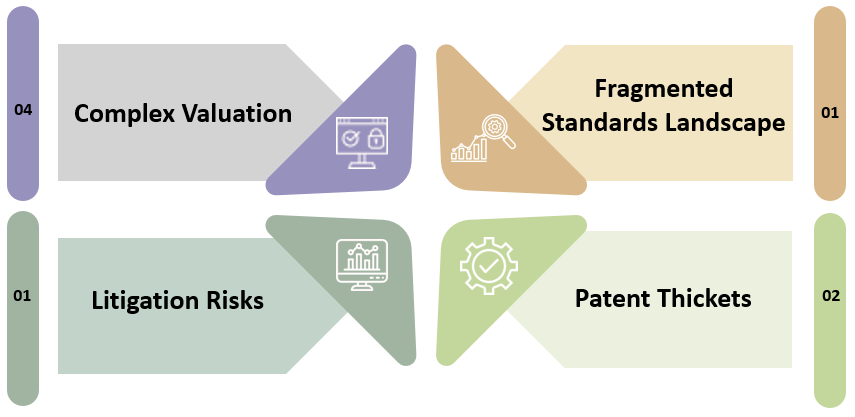
- Fragmented Standards Landscape: Unlike ICT, mechanical engineering has multiple overlapping SSOs (ISO, ASME, ASTM, SAE), making it difficult to identify a single dominant standard.
- Patent Thickets: In robotics and AM, clusters of overlapping patents can create royalty stacking problems, where implementers must license from multiple holders.
- Complex Valuation: Determining "fair and reasonable" royalties is harder when the technology affects physical performance, safety, or durability rather than data transmission.
- Litigation Risks: Automotive sector disputes highlight the growing tension between SEP holders and implementers. As cars integrate 5G, lidar, and autonomous driving systems, SEPs extend beyond ICT into mechanical domains.
5. CASE STUDIES
5.1 Automotive Industry
- Connected & Autonomous Vehicles (CAVs): Vehicle-to-everything (V2X) standards combine ICT and mechanical systems. Disputes have arisen between telecom SEP holders and automotive OEMs (e.g., Nokia vs. Daimler in EU courts).
- Emission Standards: Drivetrain efficiency patents tied to compliance with Euro 6/7 emission standards highlight mechanical SEPs in play.
5.2 Additive Manufacturing (3D Printing)
ISO/ASTM standards for AM include protocols for file exchange, material quality, and machine calibration. Patents on powder spreading methods or laser sintering techniques may be unavoidable, making them de facto SEPs. Litigation is expected to rise as AM becomes mainstream in aerospace and medical implants.
5.3 Industrial Robotics
Collaborative robots (cobots) require standardized safety protocols. Patents covering force sensing, torque control, and collision avoidance are essential for compliance with ISO 10218/TS 15066. With interoperability crucial in smart factories, SEP conflicts are likely as different robot manufacturers adopt common standards.
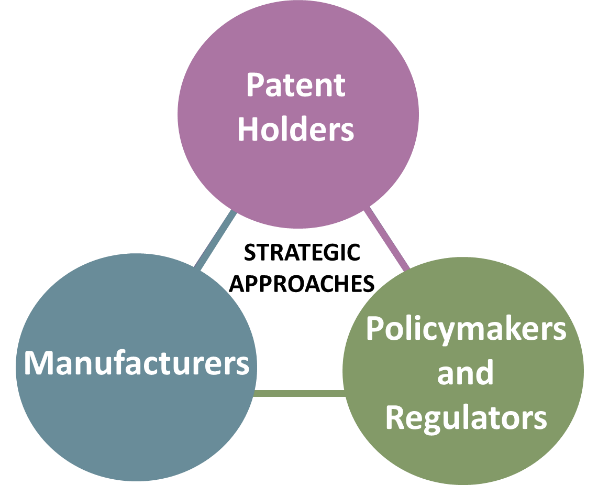
6. STRATEGIC APPROACHES FOR STAKEHOLDERS
6.1 For Patent Holders
- Participate actively in SSO (Standard Setting Organization) committees to influence standard adoption
- Establish transparent FRAND licensing models to reduce litigation exposure
- Consider joining patent pools to streamline licensing
6.2 For Implementers / Manufacturers
- Conduct SEP landscaping to identify relevant patents early
- Negotiate licensing proactively to avoid injunctions
- Utilize patent pools and collective licensing to reduce transaction costs
6.3 For Policymakers and Regulators
- Promote global harmonization of SEP licensing practices
- Ensure balance between IP protection and fair market competition
- Encourage arbitration or mediation frameworks to resolve SEP disputes efficiently
7. FUTURE OUTLOOK
The role of SEPs in mechanical engineering will expand significantly in the next decade, driven by:
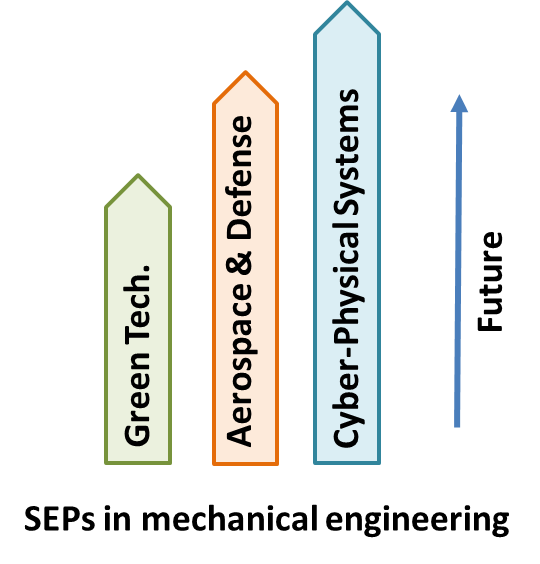
- Green Technologies: Hydrogen systems, electric drivetrains, and renewable energy infrastructure
- Cyber-Physical Systems: AI-driven robotics and digital twins
- Aerospace & Defense: Safety-critical mechanical standards with embedded digital components
As Industry 4.0 blurs the boundary between ICT and mechanical systems, SEPs will increasingly cover hybrid innovations. Litigation and licensing disputes are likely to rise, making SEP strategy a boardroom priority for mechanical engineering firms.
8. CONCLUSION
Standard Essential Patents are transitioning from an ICT-centric concept to a core issue in mechanical engineering. Automotive, robotics, and additive manufacturing industries illustrate how SEPs influence innovation, trade, and competition. To stay competitive, stakeholders must adapt by integrating SEP strategy into R&D, licensing, and compliance frameworks.


-Innovative-Applications-and-Insights.jpeg)


