1. Introduction
The arrival of 6G and 7G networks marks the next major step in wireless communication, moving far beyond what 5G can offer. These future networks are designed to deliver ultra-fast data speeds (up to 1–100 Tbps), extremely low latency (around 0.1 ms), and massive device connectivity with built-in intelligence.
Such capabilities will enable advanced applications like real-time holographic communication, extended reality (XR), digital twins, tactile internet, remote surgeries, and autonomous mobility systems. These use cases demand networks that are not only fast, but also reliable, adaptive, and intelligent.
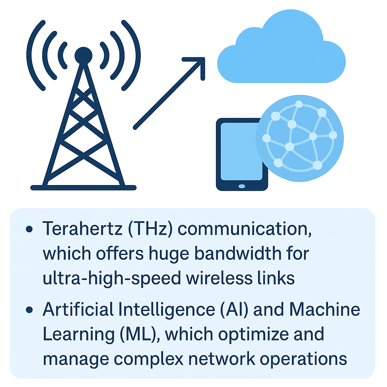
To make this vision possible, two key technologies are emerging:
- Terahertz (THz) communication, which offers huge bandwidth for ultra-high-speed wireless links.
- Artificial Intelligence (AI) and Machine Learning (ML), which optimize and manage complex network operations.
By combining THz communication with AI/ML intelligence, future 6G and 7G systems will create a new generation of autonomous, high-performance, and context-aware networks that power the connected world of tomorrow.
2. Problem Statement
As digital transformation accelerates, existing wireless networks—particularly 4G and 5G—are reaching their performance and scalability limits. Emerging applications such as real-time holographic communication, extended reality (XR), autonomous mobility, smart cities, and space-based internet demand unprecedented levels of speed, reliability, intelligence, and context-awareness that current infrastructures cannot deliver.
The evolution toward 6G and 7G faces several critical challenges:
- Spectrum scarcity: Conventional frequency bands are congested, while access to wider THz ranges is still limited by regulatory and technological constraints.
- Propagation limitations: THz frequencies, though offering vast bandwidth, suffer from high path loss and limited coverage, requiring advances in beamforming and Reconfigurable Intelligent Surfaces (RIS).
- Rigid network management: Manual or rule-based systems cannot handle the complexity and real-time demands of highly dynamic, device-dense environments.
- System complexity: The convergence of communication, computing, and sensing increases orchestration difficulty across physical and virtual domains.
- Privacy and security risks: Centralized AI training raises data protection and adversarial vulnerability concerns.
- Lack of standardization: Both THz and AI-native networking remain immature, with limited consensus on protocols, interoperability, and spectrum policies.
In summary, current wireless infrastructures lack both the raw capacity and adaptive intelligence needed to meet the demands of future digital ecosystems. Addressing these limitations through the integration of Terahertz (THz) communication and AI/ML-driven intelligence is essential for realizing the vision of truly autonomous, ultra-fast, and secure next-generation networks.
3. Technology Attributes
Terahertz (THz) Communication
The rapid growth of connected devices and data-intensive applications has driven the need for communication systems beyond 5G. 6G, expected between 2027–2030, aims to deliver wider coverage, higher capacity, faster data rates, lower latency, stronger security, and reduced energy consumption.
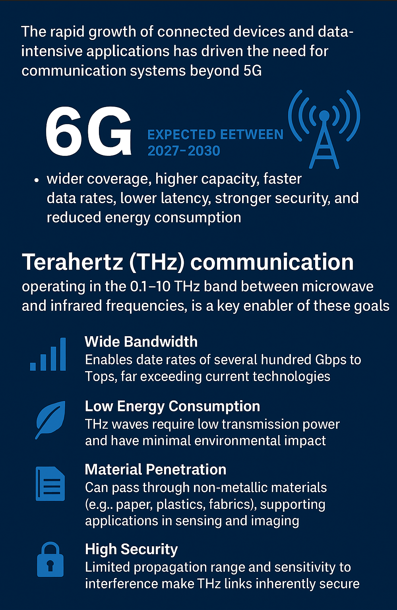
Terahertz (THz) communication, operating in the 0.1–10 THz band between microwave and infrared frequencies, is a key enabler of these goals. It offers several defining characteristics:
- Wide Bandwidth: Enables data rates of several hundred Gbps to Tbps, far exceeding current technologies.
- Low Energy Consumption: THz waves require low transmission power and have minimal environmental impact.
- Material Penetration: Can pass through non-metallic materials (e.g., paper, plastics, fabrics), supporting applications in sensing and imaging.
- High Security: Limited propagation range and sensitivity to interference make THz links inherently secure.
THz communication is gaining significant global research attention, as reflected by the rising number of publications and international initiatives in this field.
Terahertz Reconfigurable Intelligent Surfaces (RIS)
Reconfigurable Intelligent Surfaces (RIS) are key to improving THz communication performance by dynamically controlling electromagnetic waves for enhanced coverage and beam steering. RIS technologies can manipulate amplitude or phase at the pixel level to optimize signal propagation.
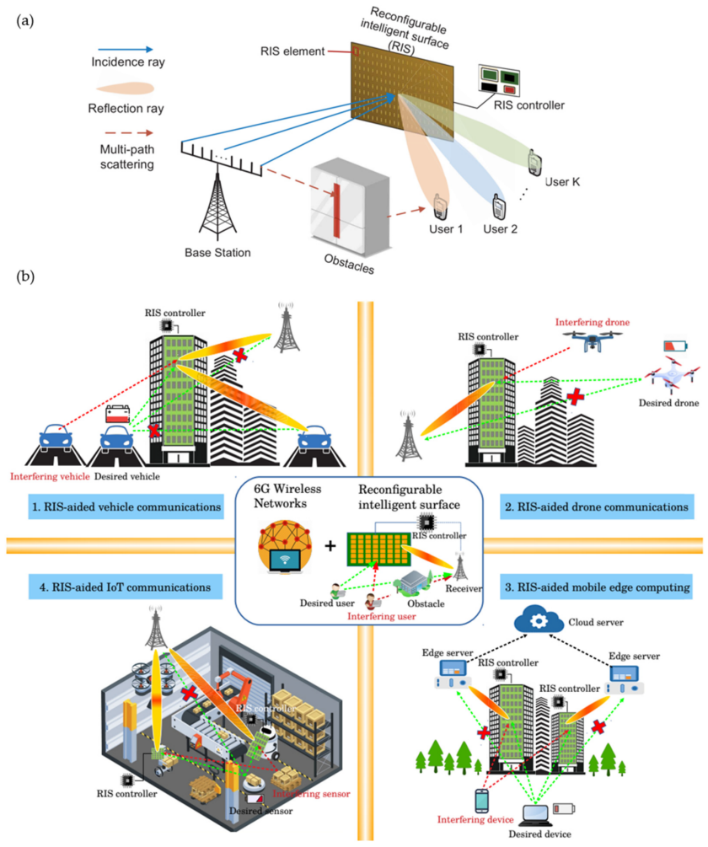
Key tuning approaches include:
- Electronic methods: Use CMOS transistors, Schottky diodes, HEMTs, or graphene-based meta-atoms for local resonance control.
- Optical methods: Employ semiconductor materials for photonic modulation.
- Phase-change materials: Utilize vanadium dioxide, chalcogenides, or liquid crystals for adaptive response.
- MEMS-based structures: Enable mechanical reconfiguration for fine-tuned beam control.
By integrating THz communication with RIS technology, future 6G systems can achieve adaptive, high-efficiency, and secure wireless connectivity.
Beamforming in Sub-THz Communication
Beamforming is a critical technique for achieving the required array gain in sub-THz frequency operations. Due to the high path loss and directional nature of THz signals, analog beamforming is the preferred implementation approach.
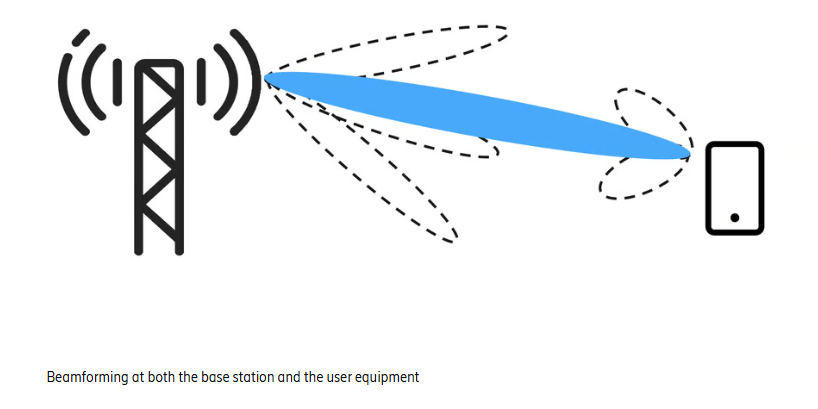
In sub-THz systems, beam management procedures are used to select optimal transmit and receive beams at both the base station (BS) and user equipment (UE). Compared to millimeter-wave (mmWave) New Radio (NR) systems, sub-THz frequencies require a much larger number of narrower beams, making precise beam alignment between the BS and UE essential for reliable connectivity.
The increased beam density also necessitates refined procedures for cell search and random access, ensuring efficient initial access and link maintenance. As line-of-sight (LoS) channels are expected to dominate in sub-THz environments, rank-2 transmission schemes are typically employed to maximize throughput and reliability.
AI & ML in 6G Networks
6G networks are envisioned to move from "connected things" to "connected intelligence", characterized by ultra-high density, dynamic heterogeneity, diverse functional requirements, and embedded machine learning (ML) capabilities. Traditional optimization-based algorithms struggle with large-scale 6G problems due to high computational costs and the need for precise mathematical models. ML, leveraging domain knowledge, offers a scalable, robust, and efficient alternative for complex optimization tasks in 6G.
Key ML-based optimization approaches include:
- Algorithm unrolling
- Learning to branch-and-bound
- Graph neural networks for structured optimization
- Deep reinforcement learning for stochastic optimization
- End-to-end learning for semantic optimization
- Federated learning (FL) for distributed optimization
These methods outperform classical algorithms in speed, adaptability, and robustness, providing the foundation for intelligent, self-optimizing networks.
Digital Twins (DTs)
Digital Twins are virtual replicas of physical systems, continuously updated to reflect real-world conditions. In 6G networks, DTs:
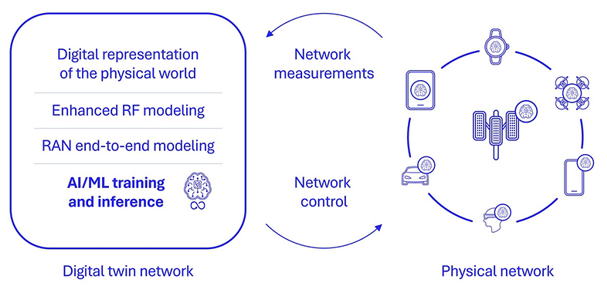
- Enable AI/ML algorithms to optimize network operations
- Improve scalability and adaptability for new services
- Enhance predictive analytics, spectrum management, and service reliability
DTs can be combined with sensing and IoT data to model physical environments, supporting applications such as:
- Smart city planning and utility management
- Real-time emergency response with 3D situational awareness
- Immersive XR experiences for gaming, tourism, training, and remote collaboration
The integration of DTs with 6G networks promises transformative value, closely intertwining the digital and physical worlds.
Federated Learning (FL)
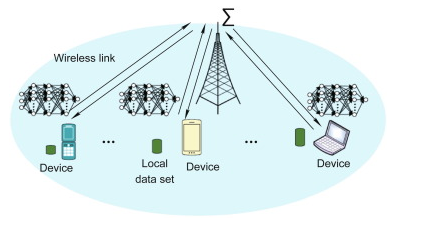
Centralized ML approaches are often impractical for 6G due to privacy concerns and communication constraints. Federated Learning allows devices to collaboratively train models without sharing raw data, preserving privacy and reducing network load. FL is increasingly critical for:
- Distributed optimization in large-scale networks
- Real-time inference and learning on edge devices
- Enabling intelligent services while maintaining data security
FL, combined with AI and DTs, forms a cornerstone of the intelligent 6G ecosystem, enabling efficient, adaptive, and privacy-aware network management.
4. Stage of Development and Market Research
Terahertz (THz) Communication
Terahertz technologies are a key focus for 6G research worldwide. Companies like Rohde & Schwarz are actively supporting projects across Europe, Asia, and the US. Notable initiatives include:
- 6G-TERAKOM: Developing wireless systems with integrated THz antennas, particularly in the D band (110–170 GHz).
- 6G-ADLANTIK: Creating photonic-electronic components for THz frequencies, enabling high-speed data transfer and advanced measurement techniques.
AI & ML in Networks
The AI in telecommunications market is rapidly expanding, estimated at USD 1.89 B in 2024 and projected to reach USD 50.21 B by 2034 (CAGR 38.8%). Growth is driven by:
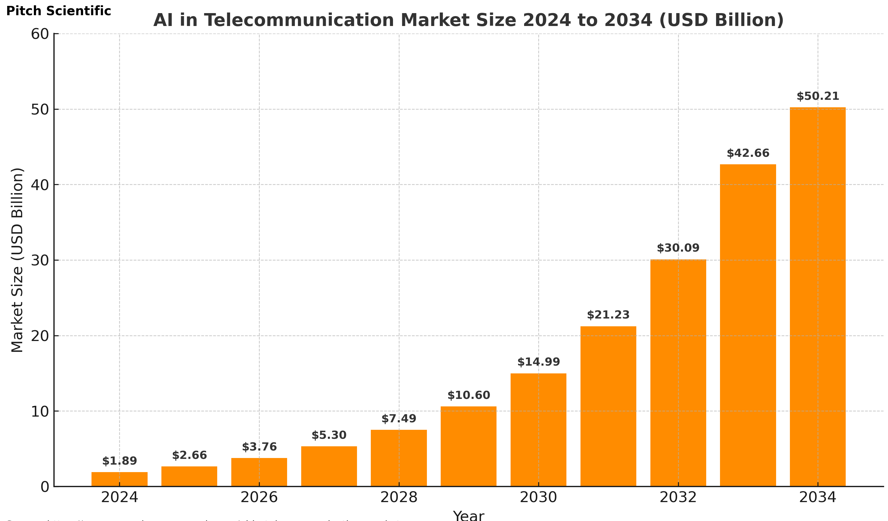
- Expansion of global telecom networks
- Focus on improving customer experience
- Reducing operational costs through intelligent automation
AI in Telecommunications Market Overview
- Market Value: USD 1.89 B in 2024; projected to reach USD 50.21 B by 2034.
- Growth Rate: Expected CAGR of 38.81% from 2025 to 2034.
- Regional Insights: North America accounted for >35% of the market in 2024. Asia-Pacific is expected to grow at the fastest CAGR from 2025–2034.
- By Component: Solutions: Largest share at 59% in 2024. Services: Expected to grow at 44.9% CAGR from 2025–2034.
- By Application: Customer Analytics: Generated >29% of the market in 2024. Virtual Assistance: Projected to expand at the fastest CAGR.
- By Technology: Data Analytics: Accounted for >32% of market share in 2024. Machine Learning: Expected to grow at the fastest CAGR during the forecast period.
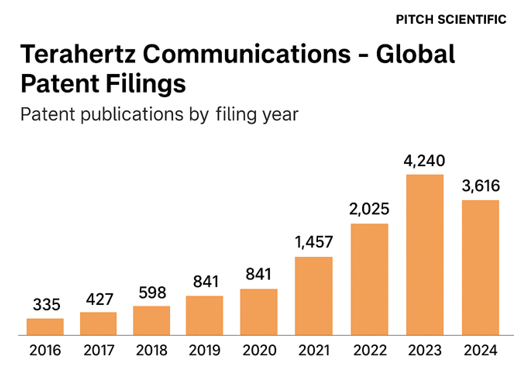
Terahertz Communications – Global Patent Filings
Renewed interest in terahertz (THz) technology has led to a significant surge in research and innovation. Data from global intellectual property offices show a 340% increase in THz-related patent applications between 2018 and 2022.
5. Benefits
Terahertz (THz) Communication
- Wide Bandwidth: Supports ultra-high data rates up to several hundred Gbps, far exceeding current wireless technologies.
- Low Energy Consumption: Requires minimal power with limited environmental impact.
- Material Penetration: Can pass through non-metallic materials (e.g., paper, plastics, fabrics), enabling applications in medical imaging and security.
- High Security: Limited propagation and sensitivity to interference make THz links inherently secure for military and monitoring applications.
AI/ML in Networks
- Network Optimization: Analyzes traffic patterns to improve performance and reduce costs.
- Predictive Maintenance: Forecasts equipment failures and optimizes bandwidth to reduce downtime.
- Enhanced Customer Experience: Chatbots and virtual assistants deliver instant, personalized support.
- Automation & Cost Savings: Automates tasks like capacity planning, improving efficiency and lowering operational costs.
- Fraud Detection: Identifies anomalies and prevents network fraud in real time.
- 5G Integration: Supports network slicing, resource management, and complex infrastructure handling.
Barriers and Challenges
- Hardware & Cost: THz components, including lasers and antennas, are expensive and often proprietary.
- Path Loss & Propagation: Signals degrade rapidly and have limited range and penetration.
- Technological Maturity: THz technology is relatively new (<30 years) with unresolved technical bottlenecks, including atmospheric absorption and high transmission losses.
- Standardization: Spectrum allocation and AI-integrated network protocols are still in early stages.
- AI Model Security: Federated learning and AI systems face trust and adversarial attack concerns.
- Skill Gaps: Requires expertise across RF, photonics, and AI, which is rare.
6. Conclusion
The integration of THz communication and AI/ML will define the future of 6G and 7G networks. THz provides ultra-high data rates for applications like holography, brain-computer interfaces, and tactile internet, while AI/ML enables intelligent, adaptive, and automated network management. Together, they overcome technical challenges such as signal attenuation, limited range, and hardware complexity, enabling real-time optimization, predictive behavior, and privacy-preserving edge learning. Realizing their full potential requires standardization, scalable hardware, security measures, and collaboration between academia, industry, and governments. Ultimately, THz + AI/ML will drive immersive, intelligent, and deeply connected networks, shaping the digital world of the 2030s and beyond.

-Sensors-Next-Generation-Flexible-Devices/Wrinkled-Silver-Nanowire-AgNW-Sensors-Next-Generation-Flexible-Devices.png)


-Innovative-Applications-and-Insights.jpeg)


