PITCH SCIENTIFIC
INSIGHTS
Transparent Solar Glass – The Energy Generating Windows
Executive Summary
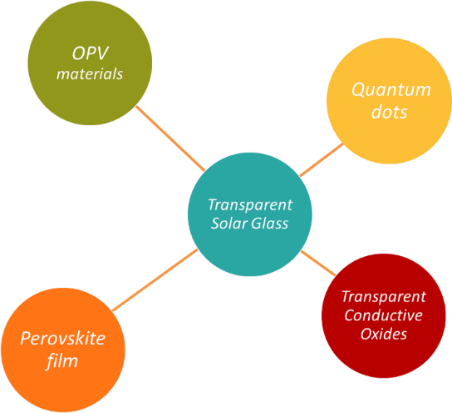
Transparent solar glass is a next-generation photovoltaic technology that integrates solar energy generation into transparent surfaces like windows. Unlike conventional solar panels, it permits visible light to pass through while harnessing ultraviolet (UV) and infrared (IR) light to produce electricity. By embedding materials such as organic photovoltaics, perovskite films, or transparent luminescent solar concentrators within the glass, buildings can retain natural lighting and clear visibility while simultaneously generating clean, renewable energy.
This whitepaper explores the science, applications, challenges, market case studies, and future potential of transparent solar glass for energy-generating windows, positioning it as a sustainable solution for urban energy needs.
1. Introduction
With the rising global demand for renewable energy, the need for innovative and space-efficient solutions has become increasingly critical. Transparent solar glass (TSG) stands at the forefront of sustainable architecture, serving as both a conventional window and a source of clean electricity.
Conventional rooftop solar panels are effective but restricted by available surface area and aesthetic concerns, particularly in urban settings. Transparent solar glass provides a complementary alternative by transforming vertical windows into energy-generating surfaces. By embedding photovoltaic or thermoelectric components directly into glass, these energy-generating windows allow buildings to passively capture solar energy while preserving natural light and architectural aesthetics.
2. Purposed Solution: Technology Overview
2.1 How Transparent Solar Glass Works
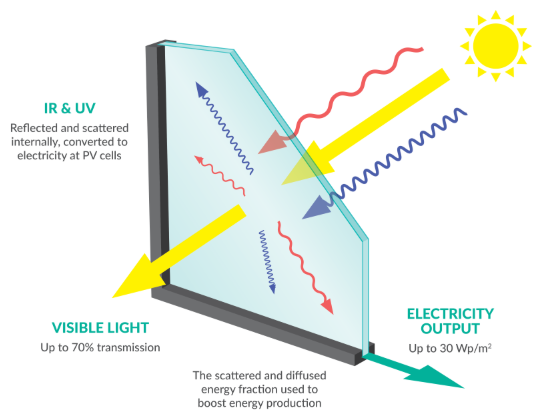
Transparent solar glass utilizes organic photovoltaic (OPV) materials, quantum dots, or perovskite-based thin films that selectively absorb non-visible wavelengths of sunlight (infrared and ultraviolet). Visible light passes through the glass, preserving transparency, while absorbed light is converted into usable electricity based on the Seebeck effect.
2.2 Components
Main component of transparent solar glass, at the forefront of sustainable architecture, comprises:
2.3 Efficiency Considerations
Current transparent solar glass prototypes achieve 8–12% efficiency, with research targeting efficiencies up to 20%.
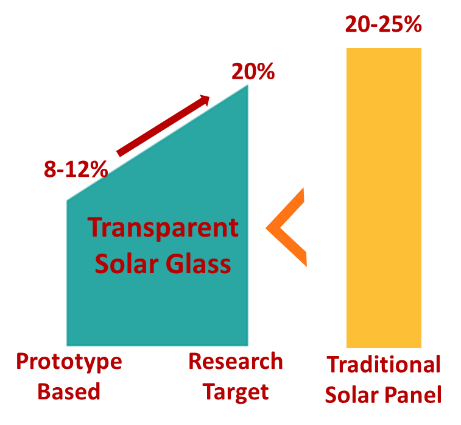
While lower than traditional silicon solar panels (~20–25%), the ability to integrate into large surface areas like skyscraper windows offers significant aggregate power generation.
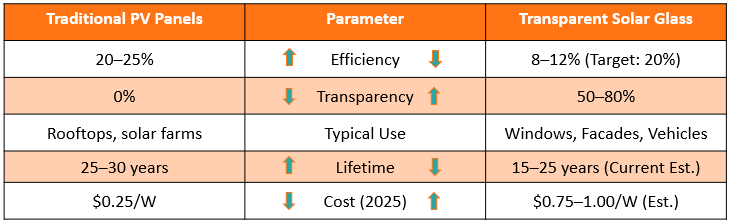
2.4 Quantitative Comparisons
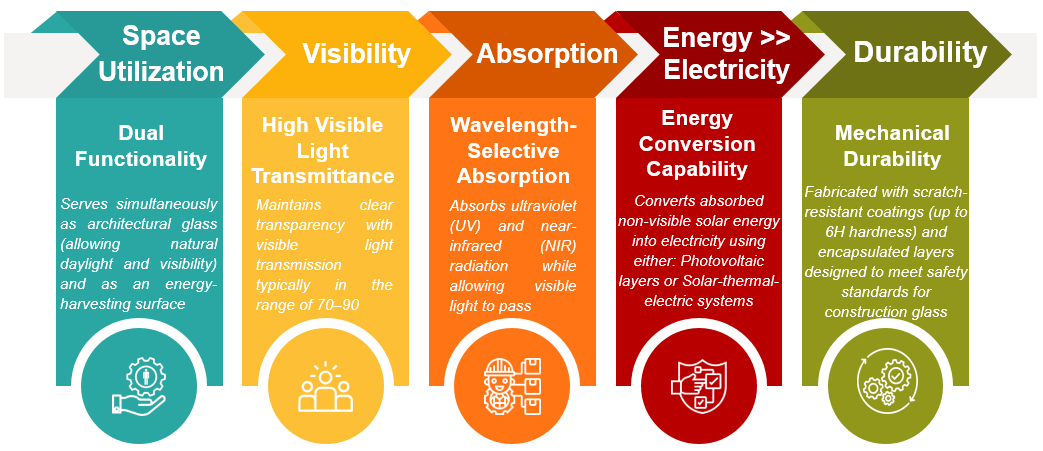
3. Benefits: Transparent Solar Glass
4. IP Activity in Transparent Solar Panel/Glass
As part of our analysis of patent activity in transparent solar panel integrated in building, an IP study was conducted to identify patents related to this technology and a total of 457 applications were selected for final analysis.
4.1 Relevant keywords, synonyms and classes used for search
- Solar Panel, Energy panel, Solar cell, Solar plate, Transparent solar panel, building-integrated photovoltaic systems, BIPV System
- Transparent window, See through window, Translucent window, Building glass
- Relevant patent classification includes H02S20/26, H02S20/22, H02S30/00 and H10K30/211
4.2 Graphical Analysis from the identified patents (457 patent applications):
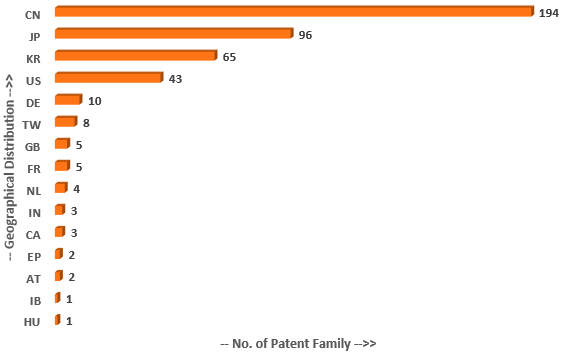
Figure 5 shows the distribution of patents across priority countries (top 15), providing insight into major R&D locations for building integrated transparent solar window, China has most patents i.e., 194, followed by JP with 96 patents. India also holds 10th position.
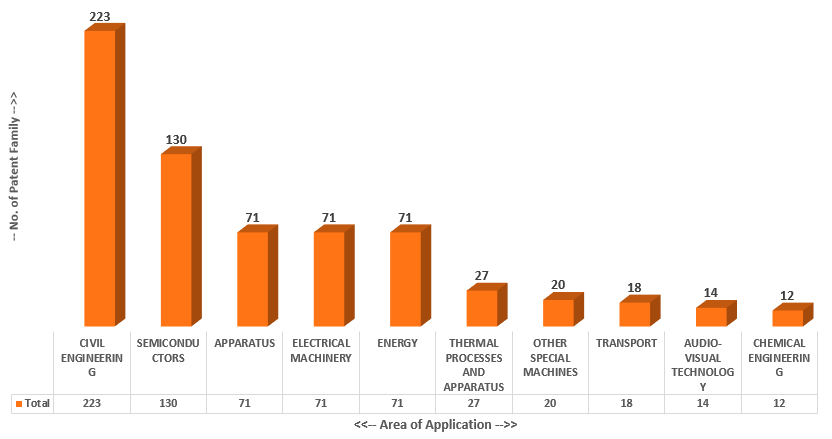
Figure 6 shows the application area of building integrated transparent solar window with a major focus on Civil engineering, with 223 patents family in this domain. Semiconductor also hold at second place, with 130 patents family. Transport sectors also shown interest in transparent solar window which may introduce in future EVs.
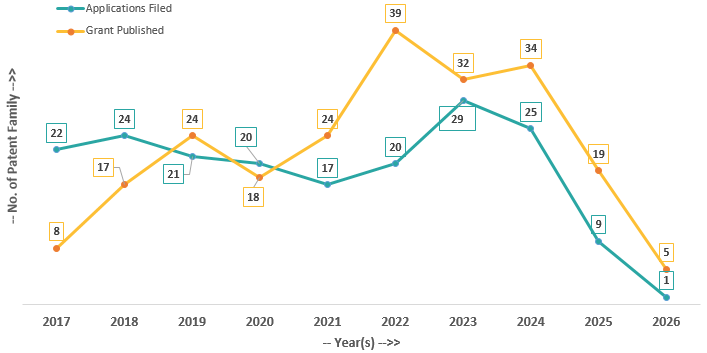
Figure 7 shows the patenting trend from last 10 year. Graph shows the zigzag growth from 2017 to 2024 and then a sharp downfall after 2024 (It might be due to unpublished patents) in application area of building integrated transparent solar window. However, 2026 shows the hopeful growth (by data till Feb 2026) under the technology.
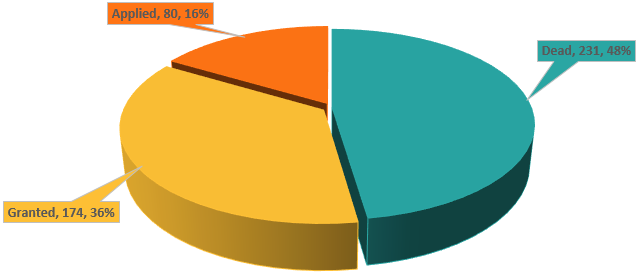
Figure 8 shows a pie chart demonstrating the total number of active (granted and applied) and inactive patents, with 52% patents categorized as “Active” and 48% as “Dead”. Out of “Active” patent 36% are “Granted” and 16% are “Pending” application.
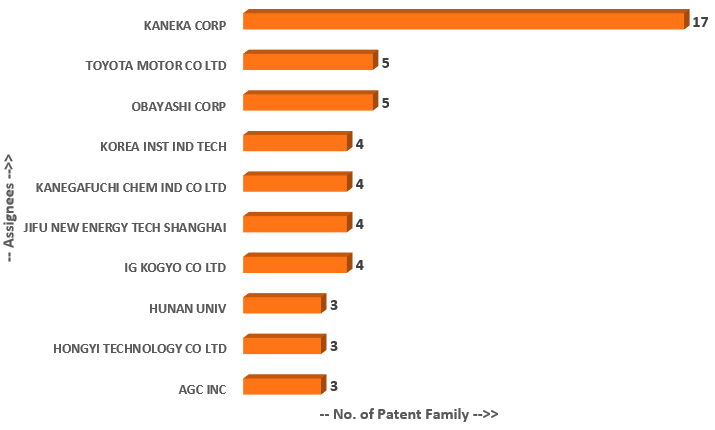
Figure 9 Shows top patent assignees, with the Kaneka Corp leading with 17 patents, followed by the Toyota Motors and Obayashi Corp.
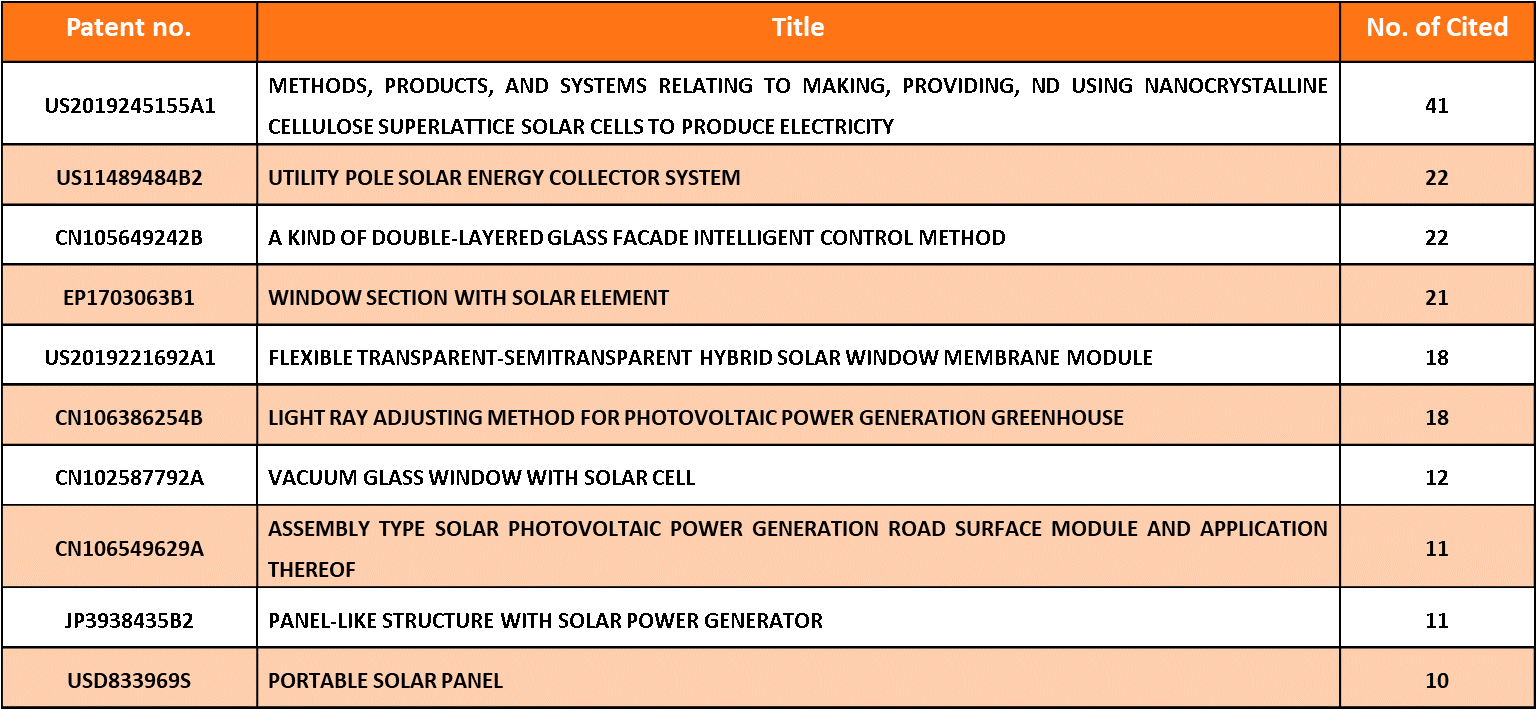
Table 2 Shows top cited references list, with US’155 holds 41 cited references.
5. Market and Commercial Outlook
5.1 Market Potential
5.2 Global Market Dynamics
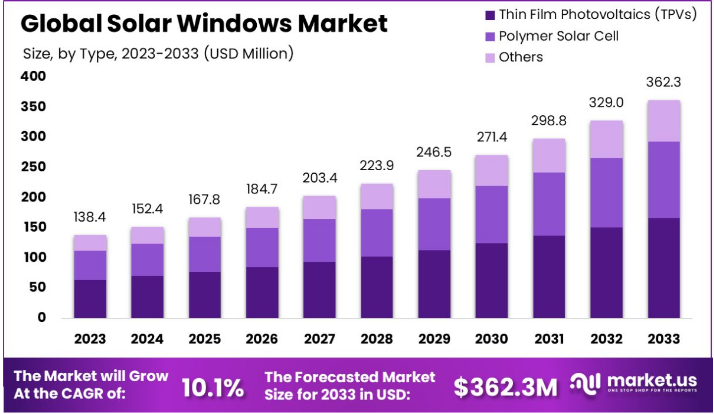
The global Solar Windows market is segmented into several key regions: North America, Europe, Asia Pacific, Middle East & Africa, and Latin America. The global solar windows market is projected to reach approximately USD 362.3 million by 2033, up from USD 138.4 million in 2023, reflecting a CAGR of 10.1% between 2024 and 2033. North America accounts for 32.3% of the market, valued at USD 44.5 million.
Europe follows closely, benefiting from stringent environmental regulations and high consumer awareness regarding sustainable energy solutions. The region’s technological advancements and the presence of leading market players contribute to its robust growth.
Asia Pacific is projected to exhibit rapid growth in the Solar Windows market due to increasing urbanization and the expanding construction sector, particularly in China and India. Governments in the region are actively promoting green building initiatives, which further fuel the demand for solar windows.
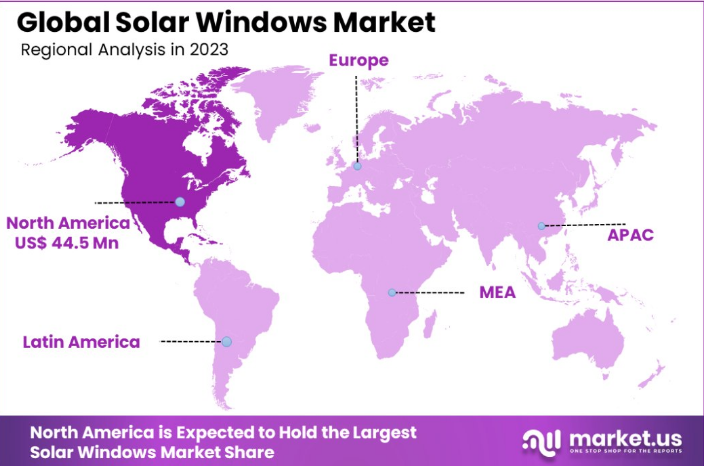
The Middle East & Africa, while still nascent in this market, shows potential due to increasing infrastructure projects and the rising demand for energy-efficient buildings. Latin America, though smaller in market size compared to other regions, is expected to grow due to the improving economic conditions and the increasing adoption of solar technologies.
Overall, with North America leading the way, each region contributes uniquely to the global market dynamics, influenced by local regulations, economic conditions, and technology penetration levels.
5.3 Market Players
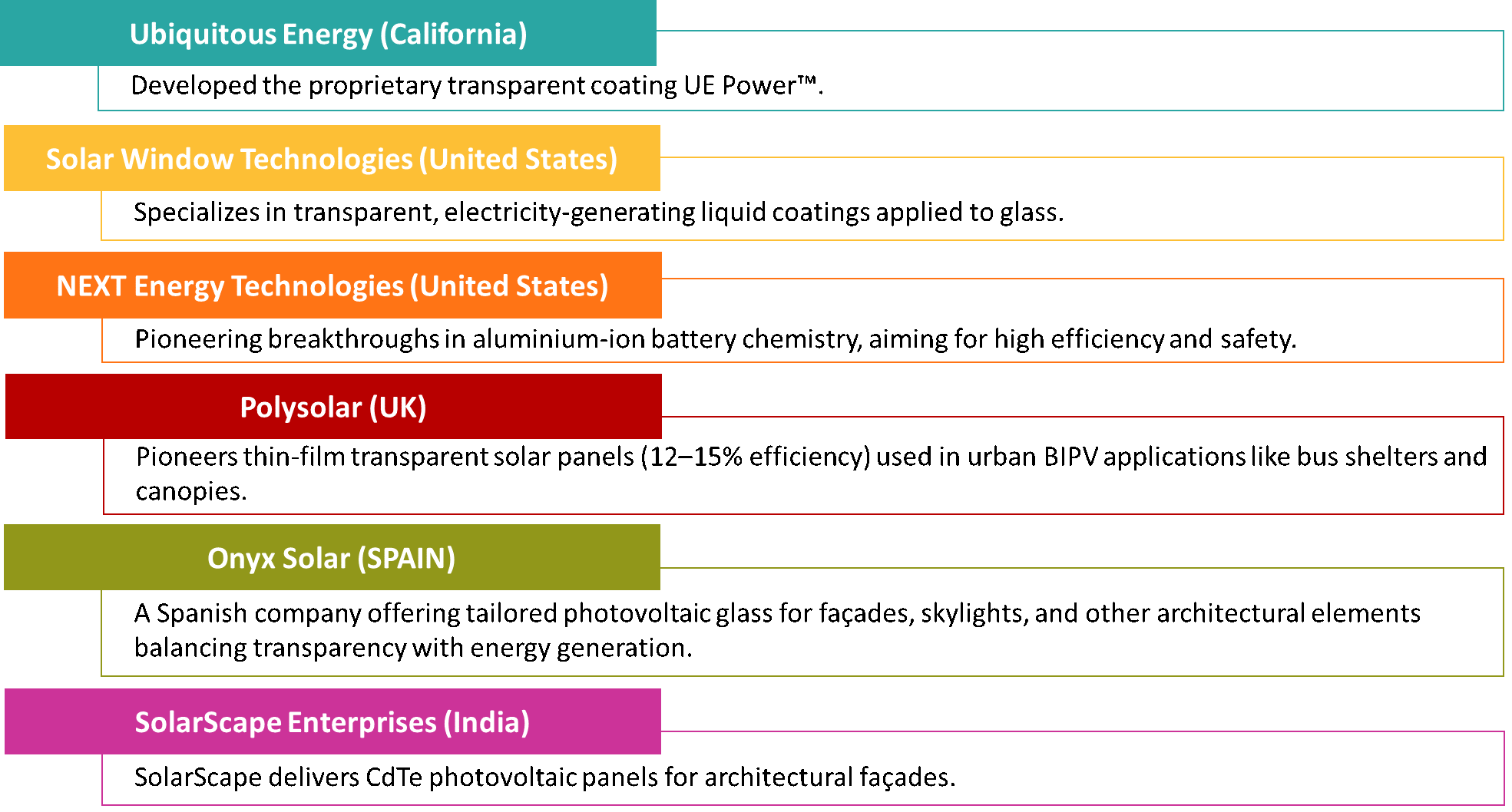
Following are some listed company in the field of manufacturing relating to solar panel.
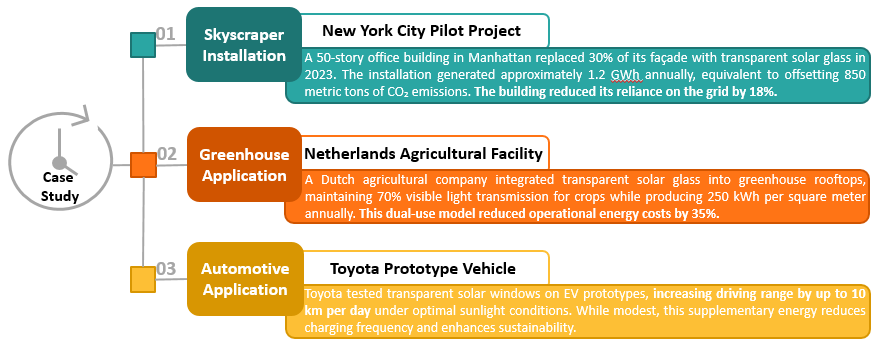
5.4 Case Studies
6. Applications Area & Future Aspect
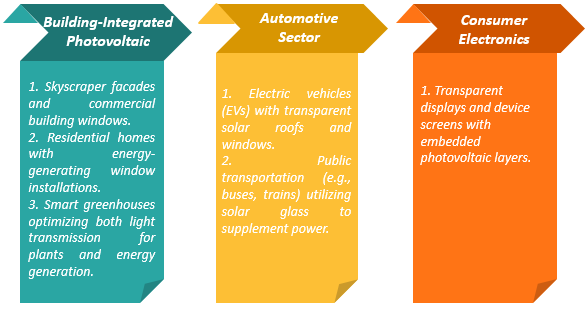
Advancements in nanomaterial and perovskite research are expected to raise efficiency and lower costs. Also, Integration with smart building systems will optimize energy management as well as widespread deployment could transform urban infrastructure into net energy producers.
7. Conclusion
Transparent solar glass has the potential to transform the way society captures and utilizes solar energy. Combining functionality with aesthetic appeal, it offers cities and industries a sustainable energy solution without sacrificing design. Case studies demonstrate its feasibility, while quantitative analyses shed light on both its strengths and limitations. Although technical and economic challenges persist, ongoing innovation is steadily advancing this technology toward large-scale commercialization.
How Pitch Scientific Supports in Transparent Solar Panel Technology
As innovation in transparent solar glass and energy-generating window technologies accelerates, securing strong intellectual property protection and ensuring freedom to operate have become critical for sustainable growth and commercialization.
Our team includes dedicated patent analysts and technology experts with specialized experience in transparent photovoltaic systems and energy-generating window technologies. They possess strong technical backgrounds in:
Building-Integrated Photovoltaics (BIPV)
Transparent conductive materials (TCOs)
Perovskite and organic photovoltaic materials
Smart glass and electrochromic systems
Advanced coating and thin-film deposition technologies
Our team supports organizations specially to emerging clean-energy technologies by conducting comprehensive prior art and patentability searches, Delivering detailed Freedom-to-Operate (FTO) analyses, Mapping global patent landscapes and competitor portfolios, Identifying white-space opportunities for future R&D and Monitoring ongoing patent activity in transparent photovoltaic and Building-Integrated Photovoltaic (BIPV) systems.
By combining deep technical understanding with strategic patent analysis, we help innovators reduce infringement risks, strengthen patent applications, and make informed R&D and investment decisions.
References
- https://advanced.onlinelibrary.wiley.com/doi/10.1002/aenm.202101213
- https://pubs.rsc.org/en/content/articlelanding/2011/ee/c1ee01646f
- https://solarmagazine.com/solar-panels/transparent-solar-panels/
- https://www.archdaily.com/1022702/powering-up-through-the-facade-maximizing-energy-with-building-integrated-photovoltaics
- https://energy.mit.edu/news/transparent-solar-cells/
- https://market.us/report/solar-windows-market/
About Pitch Scientific
Pitch Scientific is a patent research and analytics firm that supports innovation across science, technology and intellectual property. We work closely with research teams, IP professionals and decision-makers to help them navigate complex technical and patent landscapes with clarity and confidence.
With strong experience in patent analytics, prior art research and technology intelligence, Pitch Scientific works with start-ups, research-driven organizations, corporations and law firms across a wide range of technology areas. Our team brings together scientific understanding and practical IP knowledge to deliver insights that are clear, reliable and directly relevant to client needs.
We place emphasis on sound methodologies, flexibility and consistent quality in our work. By focusing on accuracy, transparency and continuous learning, Pitch Scientific strives to create lasting value for clients and the innovations they develop.
Our Capabilities
- Knock Out Search
- Patentability Search
- Freedom to Operate Search
- Invalidation Search
- Patent Infringement Search
- Evidence of Use/Claim Charts
- Patent Portfolio Analysis
- Literature Watch
- Patent & Technology Landscape
- Technology Scouting
- Competitive Intelligence
- Market Research
Explore More Insights
Deep dives into patents, technology, and markets — curated by our research team to keep you ahead of the curve.








Pitch Scientific
Contact Us
© Copyright 2019 All Rights Reserved