Executive Summary
As global efforts to enhance energy efficiency and reduce carbon emissions intensify, HVAC systems-responsible for a significant portion of building energy use—are undergoing a transformative shift. Artificial Intelligence (AI) is emerging as a pivotal technology in optimizing HVAC operations by enabling real-time analytics, predictive maintenance, and intelligent climate control. This white paper explores how AI is redefining HVAC - from adaptive comfort management and fault detection to demand forecasting and integration with smart building ecosystems.
With leading companies such as Johnson Controls, Trane Technologies, Honeywell, and Siemens actively investing in AI-enabled HVAC solutions, and a sharp rise in AI-powered building automation patents and pilot deployments, the market trajectory is clear. Yet, challenges such as interoperability with legacy systems, high implementation costs, and data privacy concerns persist.
This paper presents a comprehensive overview of current technological advancements, industry developments, practical limitations, and the future roadmap for AI in HVAC systems.
1. Introduction
Heating, Ventilation, and Air Conditioning (HVAC) systems are foundational to modern building infrastructure, yet they face mounting challenges in a world increasingly driven by sustainability, energy efficiency, and occupant-centric design. Buildings account for nearly 40% of global energy consumption, with HVAC systems responsible for a significant share - estimated between 40–60% of commercial building energy use, and around 50% of household energy consumption in countries like the U.S.
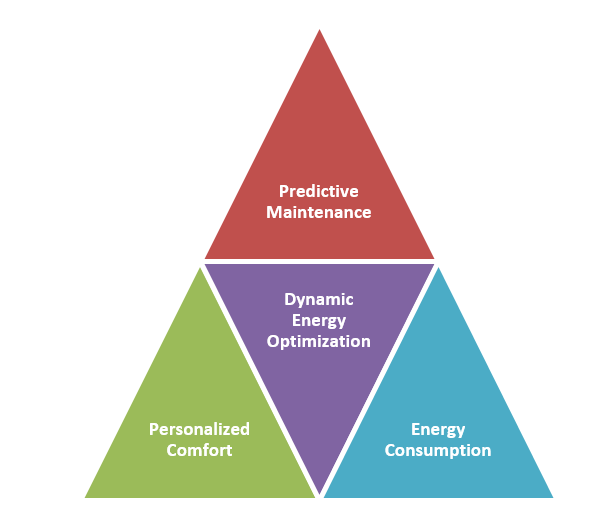
As urbanization grows and cooling demand surges— with air conditioning electricity use projected to triple by 2035—traditional HVAC systems are becoming inefficient and inadequate. Increasing climate regulations further demand low-carbon, high-performance solutions. AI is enabling a new generation of HVAC systems that are intelligent and adaptive, using real-time data for predictive maintenance, energy optimization, and personalized comfort. These systems can cut energy use by 20–30% (up to 40% in some cases) and improve indoor air quality by up to 65%, making AI essential for efficient, sustainable buildings.
2. Problem Statement
HVAC systems, though critical to indoor comfort and air quality, remain largely inefficient, rigid, and disconnected in their current form. Many operate on outdated control logic—preset schedules and thermostatic responses—without real-time awareness of occupancy, weather changes, or energy price fluctuations. This static operation leads to significant energy waste, suboptimal comfort, and elevated operational costs.
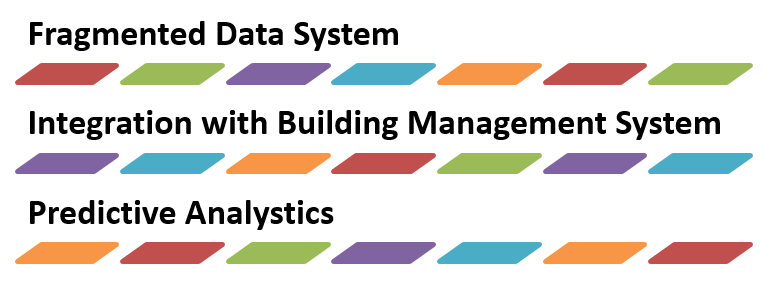
Maintenance models are outdated, relying on fixed schedules or reactive repairs that shorten equipment lifespan and increase downtime risks. As buildings grow more complex, traditional HVAC systems struggle to meet modern efficiency and sustainability demands, further hindered by fragmented data, poor BMS integration, and weak cybersecurity. These challenges call for intelligent, AI-driven HVAC systems that can monitor, learn, and optimize performance in real time.
3. Technology Attributes
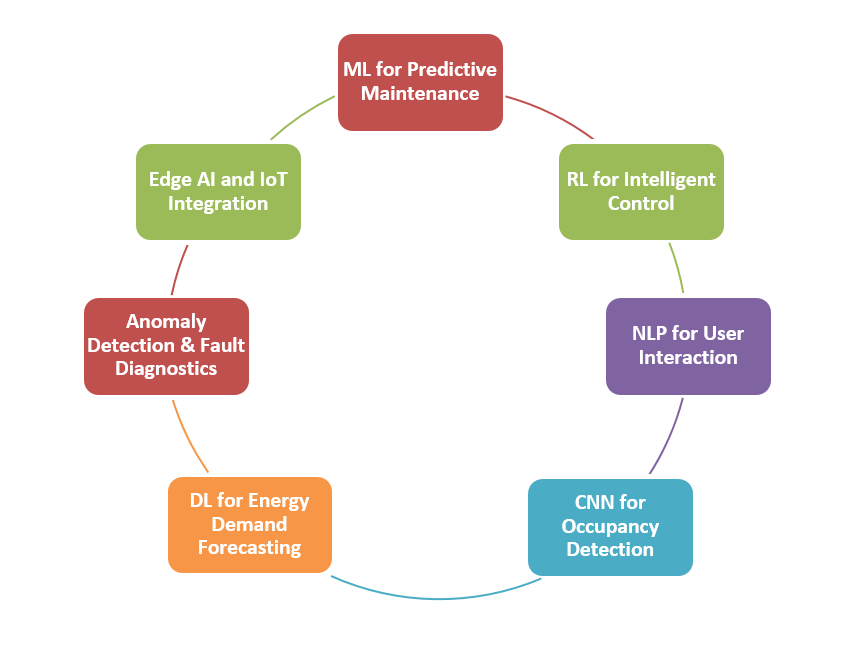
Artificial Intelligence introduces a suite of technologies that enable HVAC systems to transition from rule-based, reactive control to dynamic, self-optimizing environments. The following attributes illustrate how various AI techniques are applied across HVAC lifecycle stages—from sensing and control to forecasting and diagnostics.
AI-driven models analyze historical performance data, sensor readings, and environmental variables to detect patterns that precede equipment failure. Supervised learning algorithms can predict component degradation, allowing for condition-based maintenance instead of time-based servicing. This minimizes unplanned downtime (which costs industrial facilities up to $50 billion annually globally) and extends equipment lifespan, with studies showing maintenance cost reductions of 10–40% in AI-optimized systems.
3.1 Machine Learning for Predictive Maintenance
AI-driven models analyze historical performance data, sensor readings, and environmental variables to detect patterns that precede equipment failure. Supervised learning algorithms can predict component degradation, allowing for condition-based maintenance instead of time-based servicing. This minimizes unplanned downtime (which costs industrial facilities up to $50 billion annually globally) and extends equipment lifespan, with studies showing maintenance cost reductions of 10–40% in AI-optimized systems
3.2 Deep Learning for Energy Demand Forecasting
Deep neural networks (DNNs) process high-dimensional data—such as weather conditions, occupancy patterns, and energy usage—to forecast HVAC load with high precision. Accurate forecasting has been shown to reduce energy consumption by up to 20–30% in commercial buildings, contributing to a potential annual saving of $2 billion in the US alone.
3.3 Reinforcement Learning for Intelligent Control
Reinforcement learning (RL) algorithms learn optimal control policies through trial and error in simulated or real environments. RL-based HVAC systems can improve energy efficiency by 15–25% while maintaining or enhancing occupant comfort, according to recent pilot projects in smart commercial buildings.
3.4 Computer Vision for Occupancy Detection
AI-enabled vision systems, using convolutional neural networks (CNNs), identify human presence, count occupants, and assess activity levels. Studies indicate that occupancy-based control can reduce HVAC energy use by 10–20%, with some implementations achieving up to 40% savings by conditioning only occupied zones.
3.5 Natural Language Processing (NLP) for User Interaction
AI-powered voice assistants and chatbots facilitate intuitive HVAC control. User studies show that 65% of smart home users prefer voice commands for comfort adjustments, enhancing system responsiveness and user satisfaction.
3.6 Anomaly Detection and Fault Diagnostics
Unsupervised learning methods, such as clustering and autoencoders, identify operational outliers signaling equipment malfunctions. Early fault detection can decrease energy wastage by up to 25% and reduce repair costs by 30–50%, according to industry reports.
3.7 Edge AI and IoT Integration
The convergence of Edge AI and IoT devices allows local processing of HVAC data. Edge AI reduces latency by up to 90% compared to cloud-based systems, ensuring rapid response to environmental changes and maintaining operations during network outages.
4. IP Activity in AI-Integrated HVAC Systems
As part of our analysis of patent activity in AI integrated HVAC systems, an IP landscape study was conducted to identify patents related to the preventive maintenance, demand forecasting, NLP for User Interaction, occupancy detection and fault detection. A total of 1180 patent families were analyzed and 227 patent applications were selected for final analysis.
4.1 Relevant keywords, synonyms and classes used for search
- AI, Artificial Intelligence, Deep Learning, Neural Network, CNN, Machine Learning, ML, DL
- HVAC, Heating Ventilation and Air Conditioning, Air Conditioner, A/C, Chiller, Cold Blast
- Relevant patent classification includes F24F11/62, G05B13/02, F24F11/47, F24F3/044, G05D23/19, F24F11/65, F24F11/63
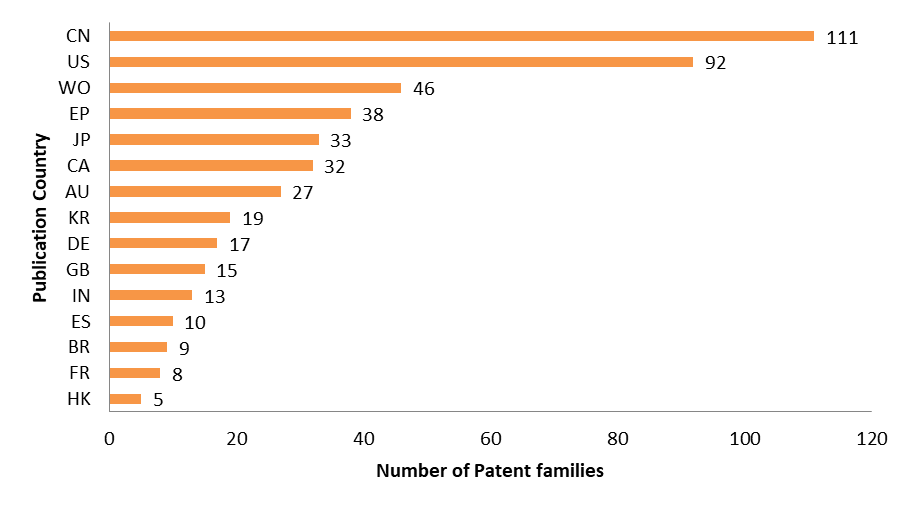
Figure 5 shows the distribution of patents across priority countries, providing insight into major R&D locations for AI integrated HVAC systems, China has most patents i.e., 111, followed by US with 92 patents.
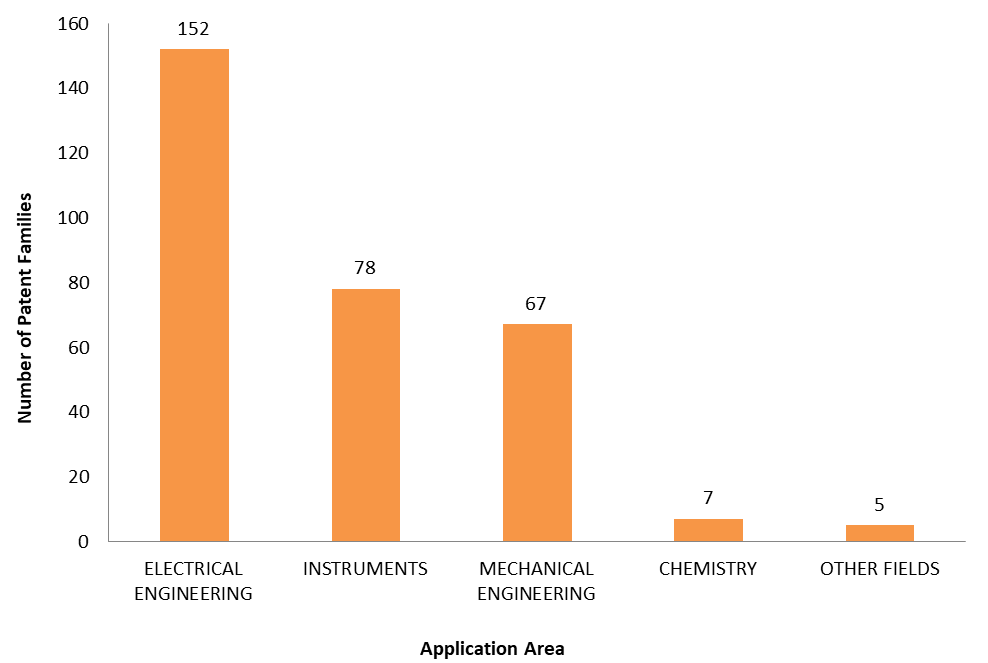
Figure 6 shows the application area of AI integration in HVAC systems with a major focus on electrical engineering, with 152 patents in this domain. Instruments also receive considerable attention, with 78 patents.
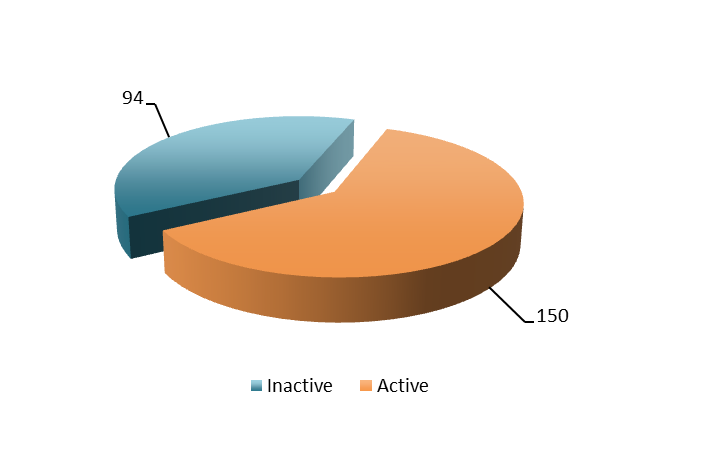
Figure 7 shows a pie chart demonstrating the total number of active and inactive patents, with 150 patents categorized as “Active" and 94 as “Inactive".
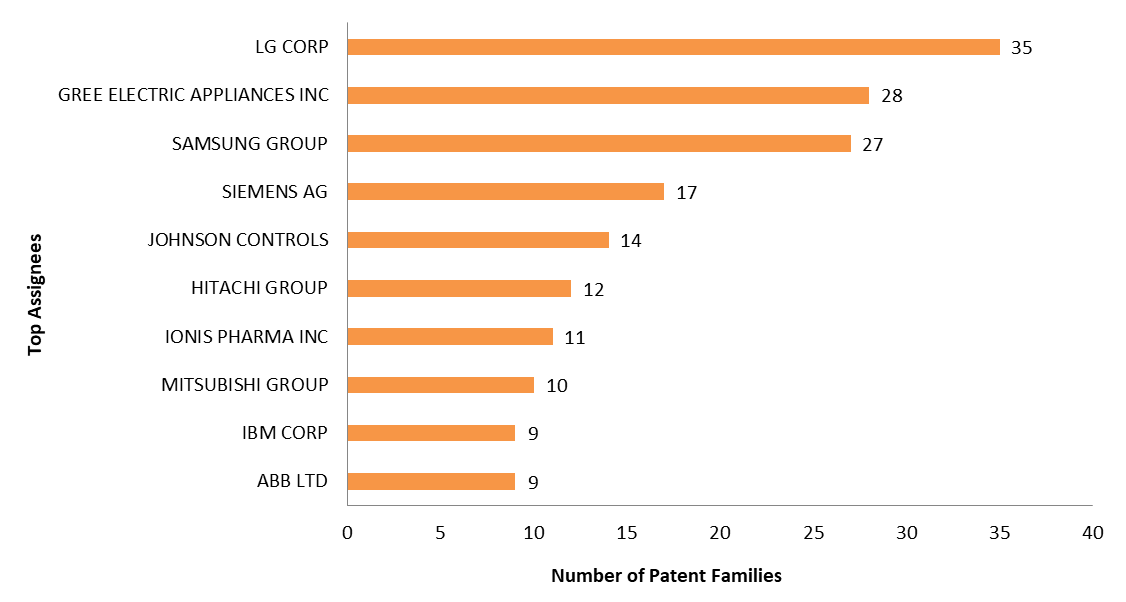
Figure 8 Shows top patent assignees, with the LG Corp leading with 35 patents, followed by the Gree Electric Appliances Inc with 28 patents.
5. Market and Commercial Outlook
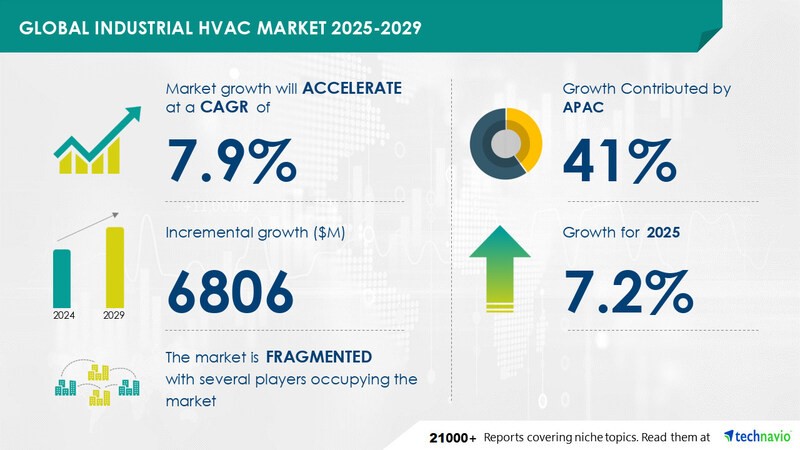
Smart HVAC: The smart HVAC market size is forecast to increase by USD 6.81 billion, at a CAGR of 7.9% between 2025 and 2029.
5.1 LG Electronics
Multi V™ i: LG's Variable Refrigerant Flow (VRF) system, equipped with an advanced AI engine, offers features like AI Smart Care, which adjusts cooling/heating based on room occupancy and ambient conditions, and AI Energy Management, allowing users to set energy consumption targets. These innovations aim to reduce energy consumption and enhance indoor comfort.
OhmConnect Partnership: LG has integrated its room air conditioners with the OhmConnect Demand Response program via the LG ThinQ App. This collaboration allows U. S. consumers to earn rewards by automatically reducing energy consumption during peak grid demand periods.
5.2 Samsung Electronics
ABB Collaboration: Samsung has partnered with ABB to provide integrated smart building solutions. This collaboration combines Samsung's HVAC products with ABB's home automation technologies, facilitating energy savings and enhanced device management through a unified platform
SolarEdge Partnership: Samsung signed a partnership with SolarEdge to expand its Net Zero Home ecosystem. By integrating SolarEdge's smart energy solutions with Samsung's heat pumps and SmartThings Energy platform, the collaboration aims to optimize energy consumption and promote energy independence for homeowners
6. Conclusion
Artificial intelligence stands at the forefront of the next evolution in HVAC technology, transforming conventional systems into adaptive, predictive, and energy-efficient ecosystems. By enabling real-time responsiveness to occupant behavior, weather conditions, and grid dynamics, AI elevates HVAC performance—delivering enhanced comfort, reduced emissions, and substantial operational savings.
As outlined in this paper, leading industry players and research institutions are already deploying AI-driven HVAC solutions, from automated diagnostics and energy forecasting to wireless charging integration and smart building control. Yet, unlocking AI’s full potential requires overcoming significant hurdles: integration complexity, regulatory inertia, data governance, and skills shortages.
A collaborative push—encompassing policy modernization, technology standardization, cross-industry partnerships, and targeted workforce development—is vital to scaling adoption. The path toward intelligent, low-carbon, occupant-centric building environments are now within reach, and AI is the enabling catalyst.