Executive Summary
Wi-Fi has become the primary connectivity technology for homes, enterprises, industrial environments, and public venues. While Wi-Fi 7 (IEEE 802.11be) introduced unprecedented throughput exceeding 40 Gbps through wider channels, Multi-Link Operation (MLO), and advanced modulation schemes, emerging applications increasingly require not only higher speeds but also deterministic performance, ultra-low latency, and enhanced reliability.
Wi-Fi 8, formally known as IEEE 802.11bn Ultra High Reliability (UHR), is the next major evolution of wireless local area networking. Rather than focusing solely on increasing peak data rates, Wi-Fi 8 prioritizes consistent user experience, predictable latency, improved roaming performance, and network resilience in dense and dynamic environments.
1. Introduction
Wi-Fi 8 is the commercial name for IEEE 802.11bn, a standard currently being developed by the IEEE 802.11 Working Group. Unlike previous generations that concentrated on peak throughput, Wi-Fi 8 aims to improve the worst-case user experience. Wi-Fi 8 (802.11bn) is the next-gen Wi-Fi standard focused on Ultra High Reliability. Instead of chasing peak speeds, it prioritizes steady connections, stronger coverage, and smoother roaming even in busy networks.
It manages more devices at once and keeps your connection solid as you move around your home. Your devices will have less lag and more overall stability, even when farther away from your router.

The primary design goals include:
- Ultra-High Reliability and 25% reduction in latency under real-world conditions
- Multi-AP Coordination
- Enhanced Long-Range (ELR)
- Better operation in congested environments
- Enhanced roaming performance
- More predictable Quality of Service (QoS)
- Improved support for real-time applications
- Advanced Power Management
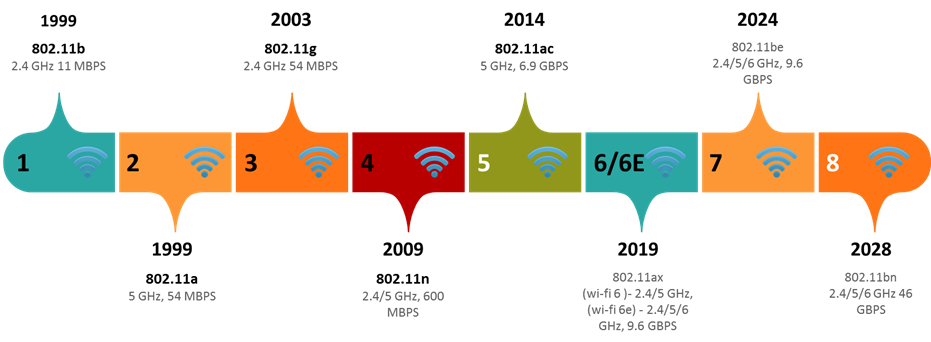
2. Wi-Fi Evolution Timeline
2.1 Key Principles
3. New Technologies and Key Features of Wi-Fi 8
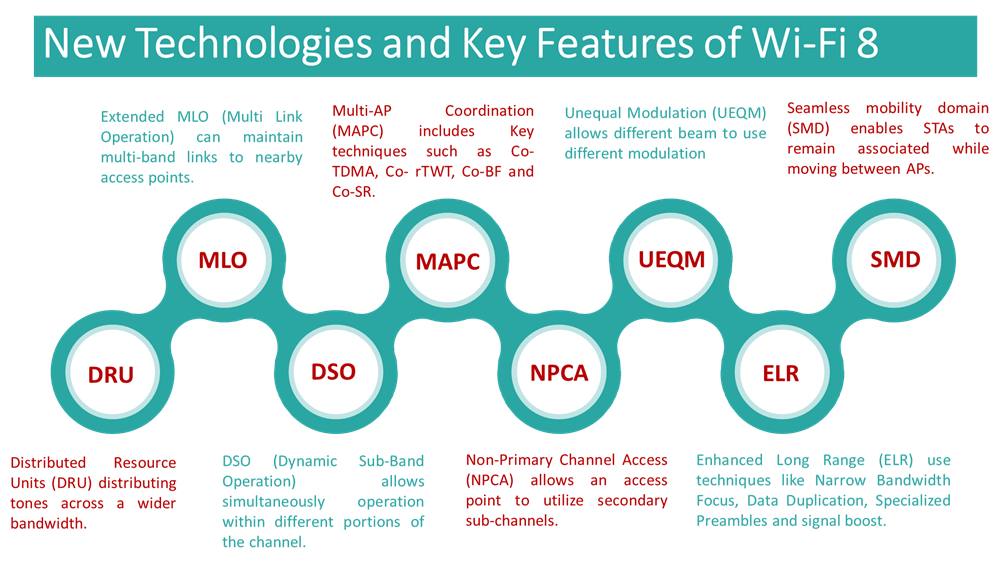
Wi‑Fi 8 introduces a range of groundbreaking technologies designed to enhance performance, reliability, and efficiency. The key features are outlined below:
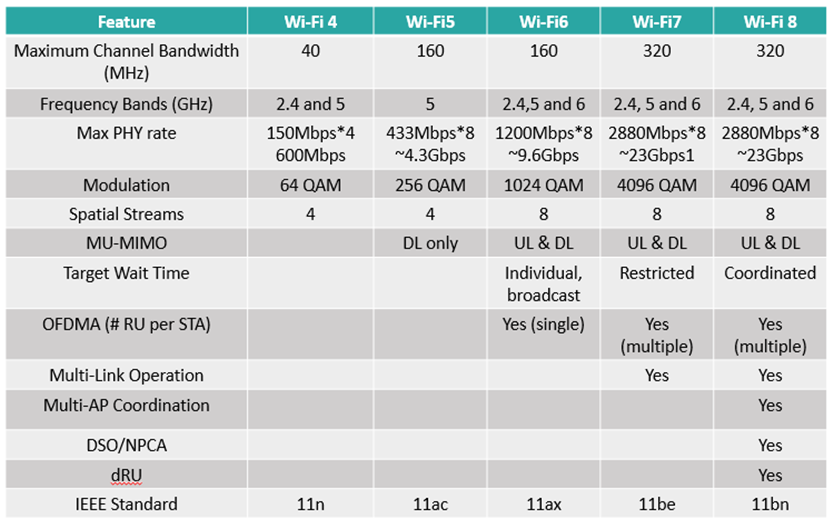
The table below shows the major features among Wi-Fi Generations.
4. Key Contributors to Wi-Fi 8
The IEEE working group leading the development of Wi-Fi 8 (802.11bn) has already received a large number of submissions from major companies. These contributions help shape the direction of the standard and give insight into which organizations are most involved. By tracking these inputs, we can follow the progress of Wi-Fi 8 and see who is influencing its core features.
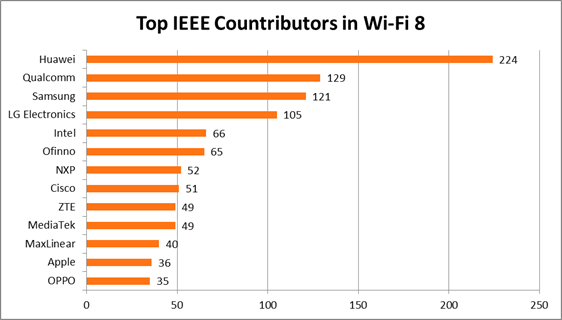
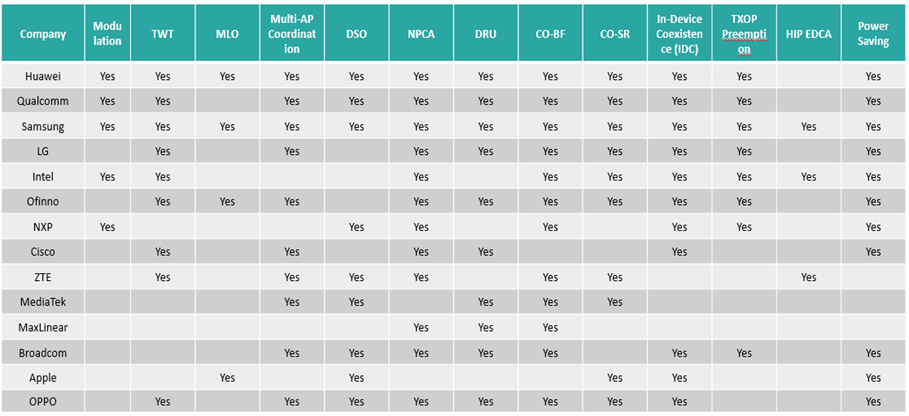
The table below shows the participation of various companies in key technical features and proposals related to wireless communication standards, highlighting which companies have contributed to specific areas such as modulation, Target wake time (TWT), multi-link operation (MLO), AP coordination, power saving, and others.
5. IP Activity in Wi-Fi 8 (802.11bn)
As part of our analysis of patent activity in Wi-Fi 8 (IEEE 802.11bn) technologies, an IP landscape study was conducted to identify patents related to the technologies in Wi-Fi 8. A total of 1829 patents application were analyzed and 288 patent or patent applications were selected for final analysis.
5.1 Relevant keywords, synonyms and classes used for search
- Wi-Fi 8, IEEE 802.11bn, Wireless Fidelity 8, Ultra-High Reliability Wi-Fi , UHR Wi-Fi
- Multi AP Coordination, Multiple Access Point Coordination, Multiple Access Point Collaboration
- Coordinated Beamforming, Cooperative Beamforming, Joint Beamforming, Distributed Beamforming, Multi‑AP Beam Steering
- Coordinated Spatial Reuse, Co-SR, Spatial Reuse Coordination, Interference Coordination, Cooperative Spatial Reuse
- Coordinated TDMA, Co-TDMA, Coordinated Time Division Multiple Access, Coordinated Time Slot Scheduling, Cooperative Time Division Access
- Distributed Resource Units, DRU, Multiple Resource Allocation
- Extended Multi‑Link Operation, Enhanced Multi‑Link Operation
- ELR, Enhanced Long Range, Extended Coverage, Range Enhancement
- Unequal MCS, Unequal Modulation and Coding, Per‑Link MCS, Link‑Specific Modulation, Independent MCS
- NPCA, Non‑Primary Channel Access, Secondary Channel Access, Alternate Channel Access, Dynamic Channel Selection, Auxiliary Channel Communication
- Dynamic Sub‑Band, Dynamic Spectrum Allocation, Dynamic Bandwidth Allocation, Adaptive Sub channel Selection
- Relevant patent classification includes H04W84/12, H04W 72/00, H04W 72/04
5.2 Graphical Analysis from the identified patents (288 patent applications):
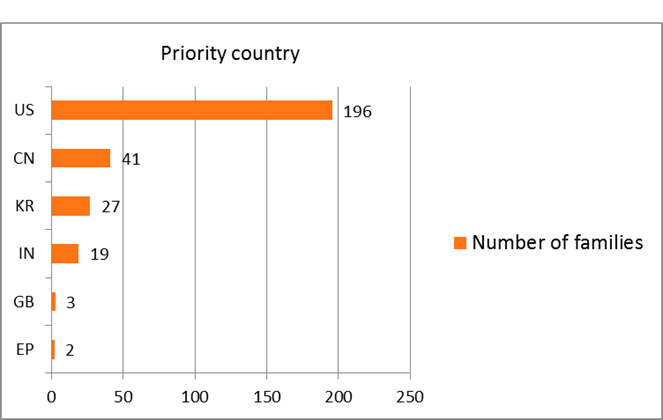
Figure 4 shows the distribution of patents across priority countries, providing insight into major R&D locations for Wi-Fi 8, United States has most patents i.e., 196, followed by CN with 41 patents.
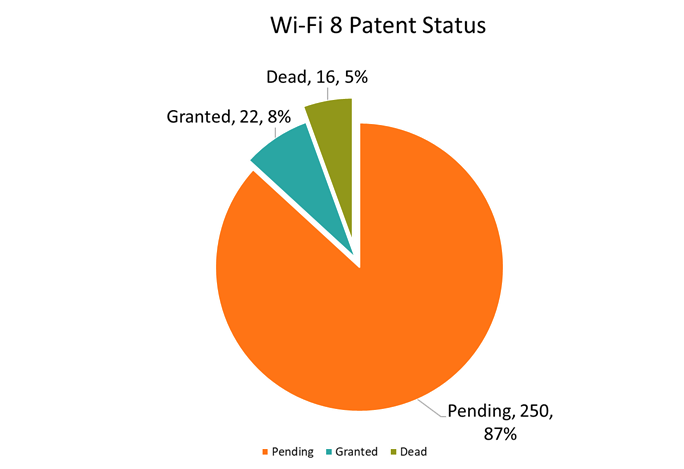
Figure 5 presents a pie chart illustrating the distribution of patents, with a total of 288 applied. Of these, 22 have been granted, 16 are classified as dead, and the remainder 250 are pending.
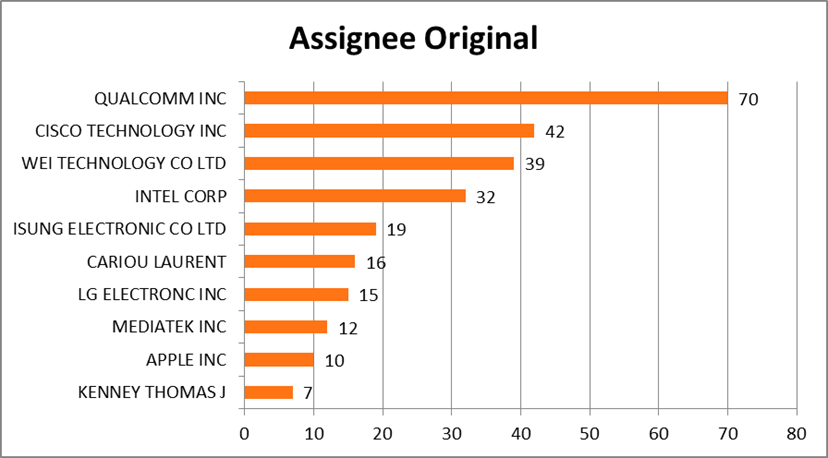
Figure 6 illustrates the leading patent assignees, with Qualcomm Inc. at the forefront holding 70 patents focused on Wi-Fi 8 generation, followed by Cisco Technology Inc. with 42 patents.
6. Market and Commercial Outlook
According to Congruence Market Insights, the global Wi-Fi 8 chipset and platform market was valued at USD 172.0 million in 2025 and is projected to reach USD 637.8 million by 2033, expanding at a CAGR of 17.8% between 2026 and 2033. This growth is fueled by rising demand for ultra-high-speed wireless connectivity and full-duplex network solutions across commercial and industrial applications.
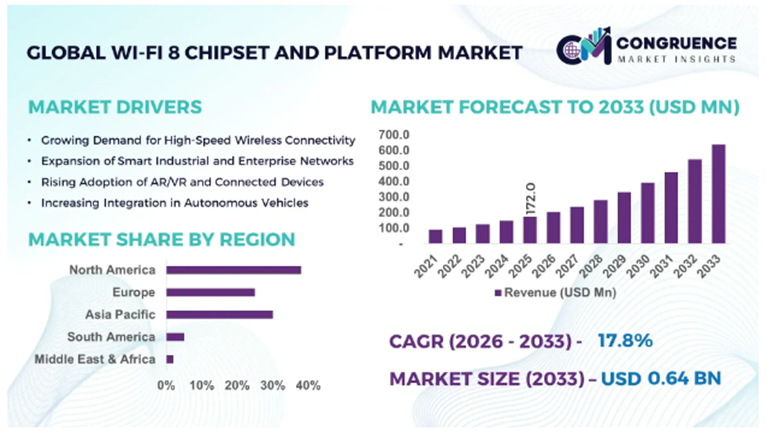
Source: https://www.congruencemarketinsights.com/report/wi-fi-8-chipset-and-platform-market
The United States dominates the global Wi-Fi 8 chipset and platform market, boasting an annual production capacity of over 12 million units and R&D investments exceeding USD 250 million for advanced Wi-Fi 8 technologies. Key application areas include smart manufacturing, autonomous vehicles, and high-density enterprise networks. Technological breakthroughs—such as OFDMA optimization, multi-user MIMO enhancements, and full-duplex support—are accelerating deployment.
7. Applications of Wi-Fi 8
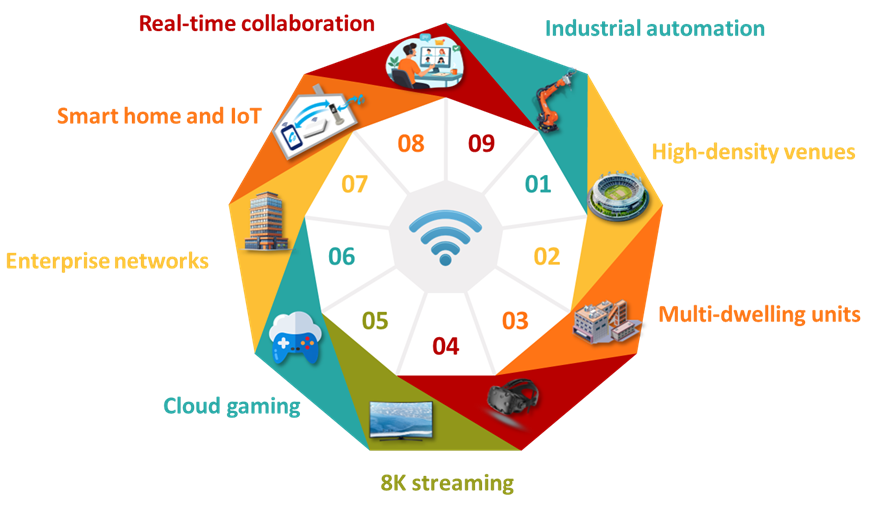
Wi‑Fi 8 has a wide range of applications across both consumer and industrial domains, enabling ultra‑fast, low‑latency, and high‑capacity wireless connectivity. It supports industrial automation, high‑density venues, multi‑dwelling units, XR (extended reality) experiences, 8K streaming, cloud gaming, enterprise networks, smart home and IoT ecosystems, and real‑time collaboration.
8. Future Outlook and Research Directions
Following our exploration of Wi-Fi 8 applications and use cases, it is essential to consider the specific challenges that companies aim to resolve. This section will highlight the critical issues identified in the Wi-Fi 8 ecosystem.
- RF interference and congestion Wi-Fi runs in unlicensed spectrum, which means interference from neighboring networks, Bluetooth devices, and other RF sources is unavoidable. Wider 320 MHz channels in WiFi 7 help, but dense environments like cities and stadiums demand smarter solutions. AI-driven dynamic frequency selection (DFS) and adaptive power control will be key to keeping connections reliable.
- Seamless roaming and mobility - Ultra-reliable Wi-Fi must allow devices to move between Access Points without dropping packets or interrupting service. This is vital in places like warehouses, hospitals, and enterprises. Wi-Fi 6E and 7 improved roaming with Fast BSS Transition (802.11r), but Wi-Fi 8 will need to push further — potentially using AI-driven predictive mobility to enable near-instant handoffs.
- Balancing power efficiency and reliability - Devices like industrial sensors and medical monitors rely on batteries, so power efficiency is key. Features like Target Wake Time (TWT) help save energy but can introduce delays. Wi-Fi 8 must find smarter ways to save power without sacrificing reliability, especially for mission-critical applications.
- Signaling overhead Signaling overhead is an essential but problematic part of network communication. It consumes bandwidth, adds latency, causes congestion, drains energy, complicates management, and can expose security risks—ultimately reducing efficiency and performance.
- Data loss - The data loss problem in WiFi-8 is addressed through a combination of advanced technologies and techniques designed to enhance the reliability and efficiency of wireless communication.
- Hidden node problem - The hidden node problem in wireless networks occurs when a node cannot detect another transmitter because it is “hidden,” even though both share the same receiver. This often happens in setups with multiple nodes communicating to a single access point or within ad-hoc networks, leading to collisions and reduced reliability.
By addressing these areas, Wi‑Fi 8 can evolve from promising innovation into a practical foundation for next‑generation connectivity across industries.
9. Conclusion
In recent years, a growing number of emerging applications with ultra-high reliability (UHR) and ultra-high throughput demands have driven further advancements in the IEEE 802.11 standard. Consequently, the IEEE 802.11 working group has engaged in extensive discussions on key enabling technologies, accelerating the evolution of the standard and paving the way for its next major revision — Wi-Fi 8.
This paper presents a comprehensive examination of the Wi-Fi 8 (IEEE 802.11bn) standard, with particular emphasis on its groundbreaking features, evolving patent ecosystem, and diverse applications. Specifically, this paper detailed the most attractive technologies that may be included in the UHR and IMMW working group, including Enhanced Multi-Link Operation (MLO), Distributed Resource Units (DRU), Enhanced Long Range (ELR), Multi-AP Coordination, Unequal Modulation (UEQM), Coordinated Spatial Reuse (Co-SR), Coordinated Beamforming (Co-BF), and Dynamic Spectrum Operation (DSO). Wi-Fi 8 significantly improves network efficiency, coverage, latency, and reliability. These advancements enable seamless roaming, more effective mesh networking, better spectrum utilization, and enhanced performance in dense residential, enterprise, and public environments.
Given the nascent stage of development, the standardization process within the UHR working group has only recently commenced, with much of the research still ongoing and open-ended. With the standard expected to reach finalization in 2028, ongoing research must continue to confront unresolved technical hurdles—such as RF interference and congestion, seamless roaming and mobility, balancing power efficiency and reliability, signaling overhead, data loss and hidden node problems, while simultaneously advancing reliability to support an ever-expanding range of applications.